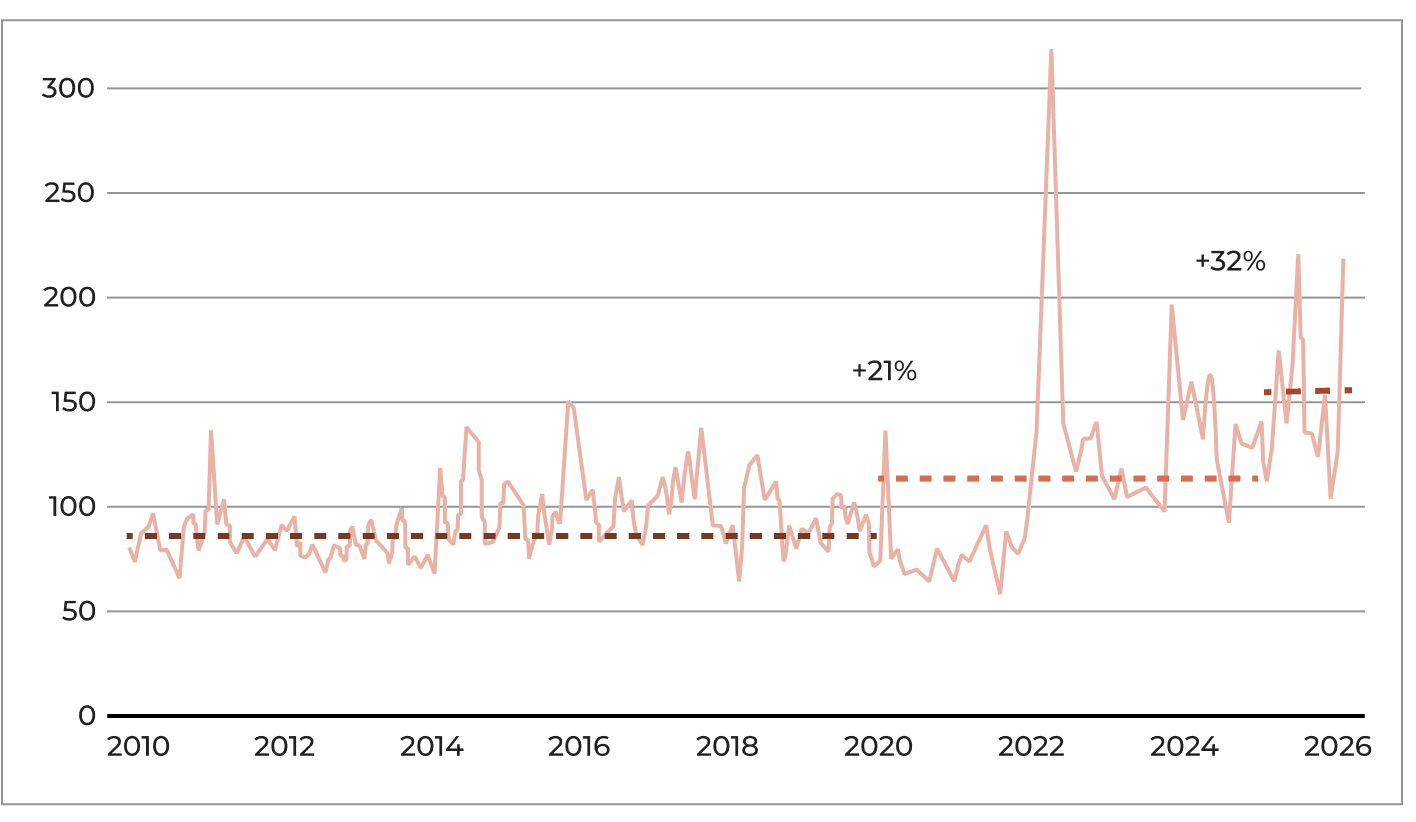
The most commonly used measure of global focus on geopolitical risk — the “Geopolitical Risk Index” — has increased 60% from its 2010s average.
Source: Marsh 2026 Political Risk Report
Some organizations thrived during the COVID-19 pandemic. Long before lockdown, their leaders had seriously considered public health scenarios, instituted and tested business continuity systems, and built trust and transparency with suppliers. Protecting and serving employees, customers, clients and communities were a planning consideration from the outset. That preparation also gave them the confidence and flexibility to activate investments, deploy innovation and act boldly while others struggled to respond.
Today’s CEOs, board members, policymakers and investors face an unusually complex and volatile environment. When the next shock hits and the new normal arises, some businesses and governments will win, and others will struggle. As leaders navigate AI, demographic change, geopolitical fragmentation, energy constraints and severe weather, decisions that once seemed peripheral to strategy are becoming central to competitiveness.
Launched in October 2026, the newest Bloomberg New Economy Coalition, co-chaired with Marsh, was formed to help organizations tangibly strengthen their competitive resilience: the ability to anticipate disruption, make better decisions and find new opportunities under uncertainty, and sustain growth and competitiveness through periods of seismic change.
Our Coalition believes that the interconnected shifts we are experiencing in geopolitics, technology, trade, climate and the workforce are proving structural rather than cyclical. That places a new responsibility on leaders to look beyond traditional functional boundaries, interrogate assumptions more deeply, and make bold decisions before events narrow their options and stifle their ability to innovate.
Below we explore five decision domains, which all are fundamentally interconnected, but reflect areas presenting global leaders with the most consequential disruptions and opportunities.
Severe weather affects infrastructure and supply chains. Geopolitics shapes technology access and sourcing. Digital concentration creates operational and third-party dependencies. Organizational capabilities determine how effectively every other form of resilience is activated.
Operational-resilience frameworks now emphasize not only technology risk but dependencies spanning people, infrastructure, third parties and supply chains.
That is why competitive resilience is ultimately a decision capability.
The organizations best prepared for the next period of volatility will not necessarily be those that correctly predict every disruption. They will be those that understand their dependencies, recognize signals earlier, know which decisions matter most and retain enough flexibility to act before circumstances make the decision for them.
In an environment where disruption is persistent, resilience is no longer simply the ability to bounce back. It is the ability to keep moving forward and uncover new opportunities while conditions are changing.

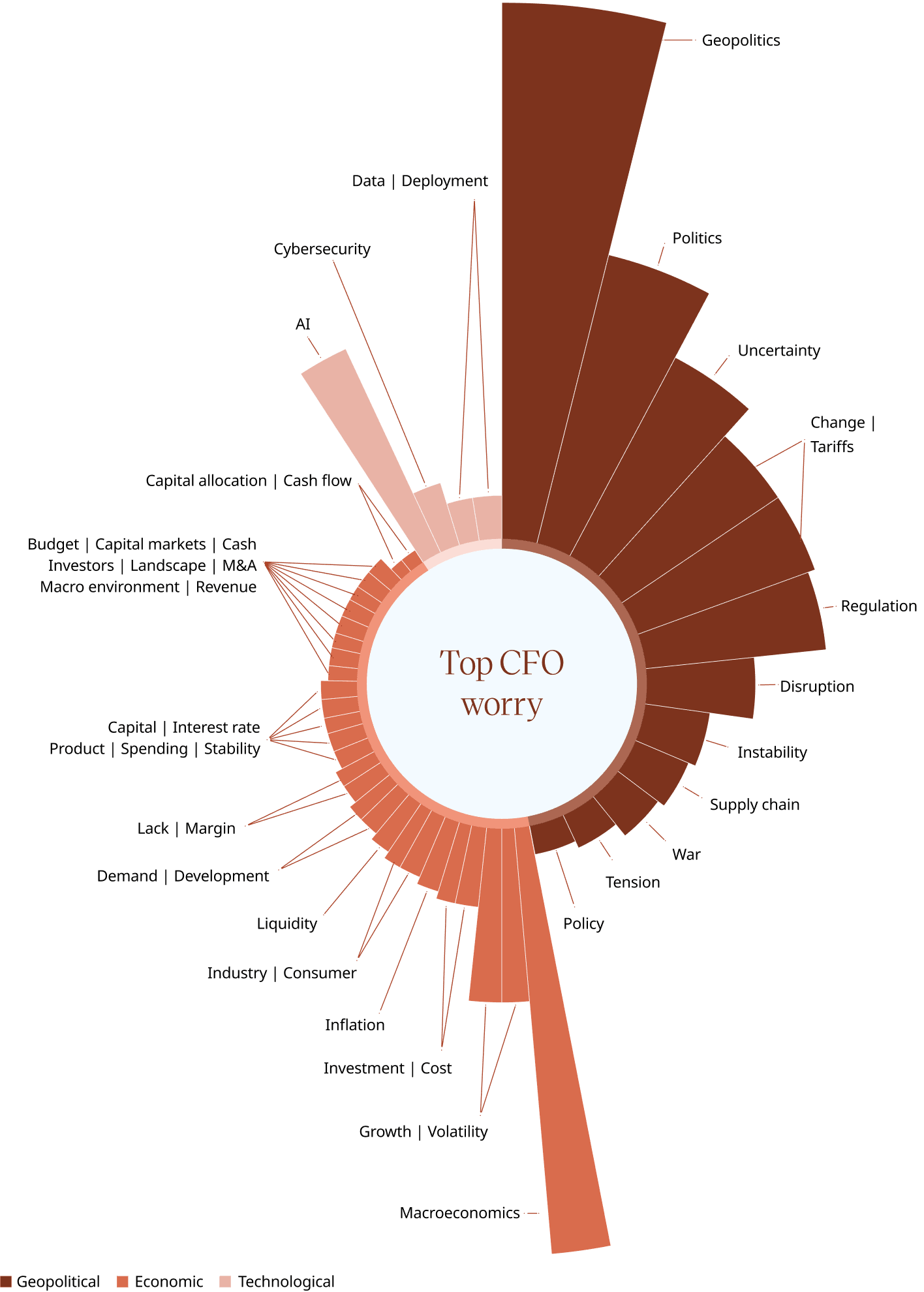
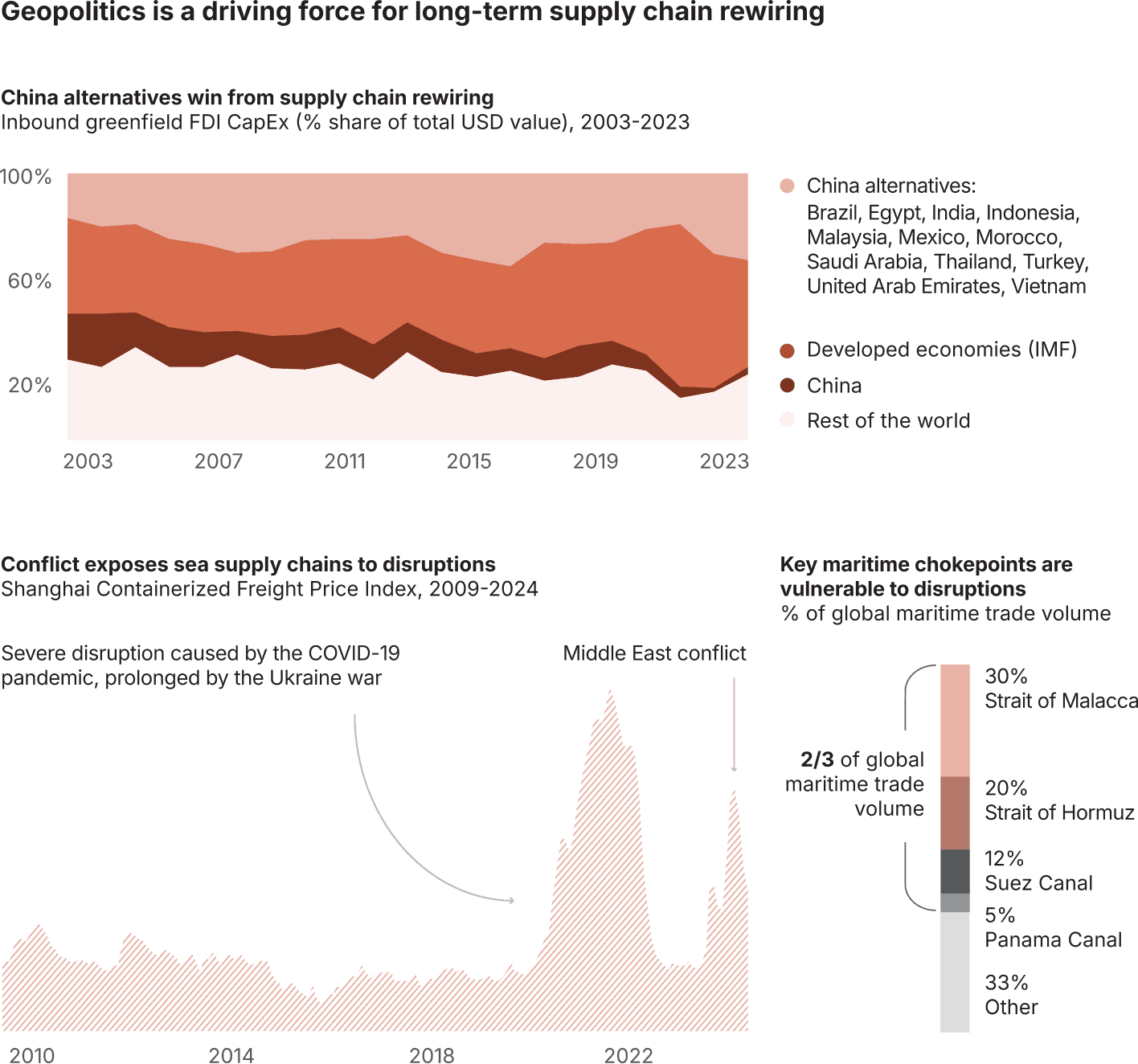
Geopolitics increasingly shapes decisions that once appeared primarily commercial: where to manufacture, which technologies to use, where to invest, which suppliers to rely on and which customers to serve.
Source: Oliver Wyman Forum x NYSE CFO Survey 2026
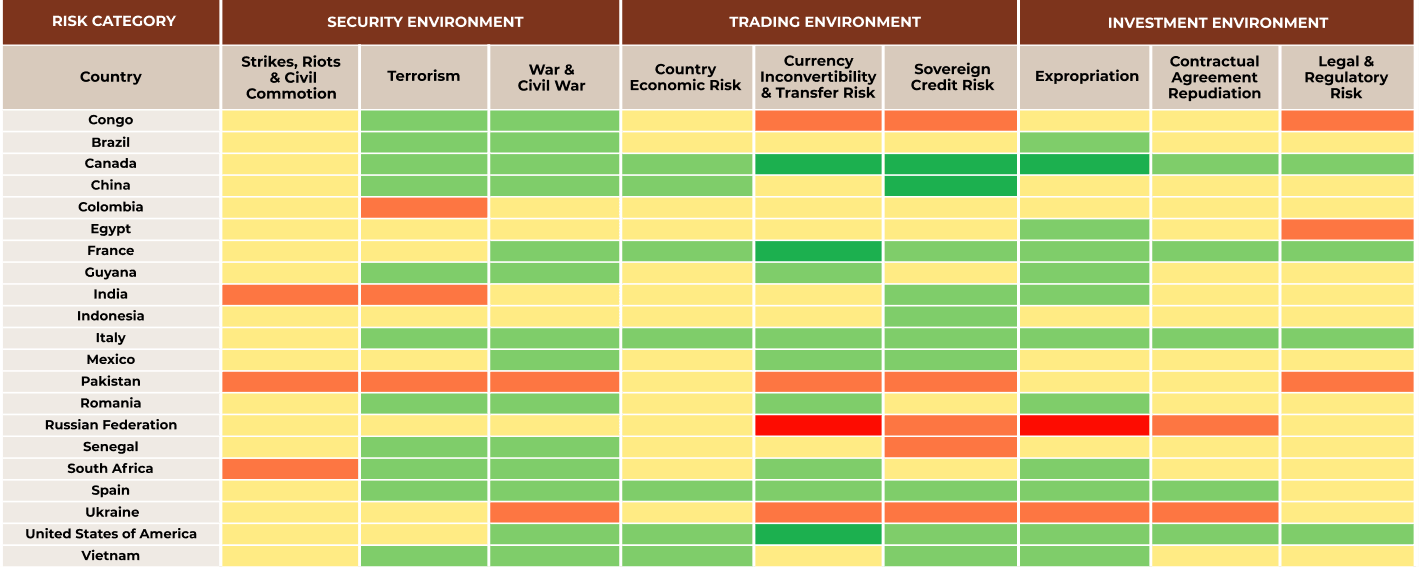
At the dawn of a reorganization of the world economy around AI and quantum computing, external and internal political pressures are leading to changes in how many economies are governed. Polarized political movements are gaining traction across several large economies, while China and the US battle for global economic primacy. This conflict and uncertainty will lead to geopolitical shocks that will force leaders to grapple with a widely changed decision matrix.
Geopolitical shocks, in the form of new trade restrictions, sanctions, industrial policy, conflict and shifting alliances can quickly change the economics of markets and supply chains. For leaders, the challenge is not simply to react to these shocks, but to make deliberate choices before these shocks force their hand.
That can mean deciding where to concentrate or diversify capacity, which markets warrant deeper commitment and where political exposure is worth accepting in pursuit of growth. These choices can affect capital, operations, technology and market access at once, making geopolitical resilience a question of strategic flexibility rather than prediction.
The goal is not maximum redundancy. It is understanding where flexibility is worth paying for, and where concentration creates unacceptable exposure.
Which conflicts could hurt us most (even if they are not the conflicts getting the most attention)?
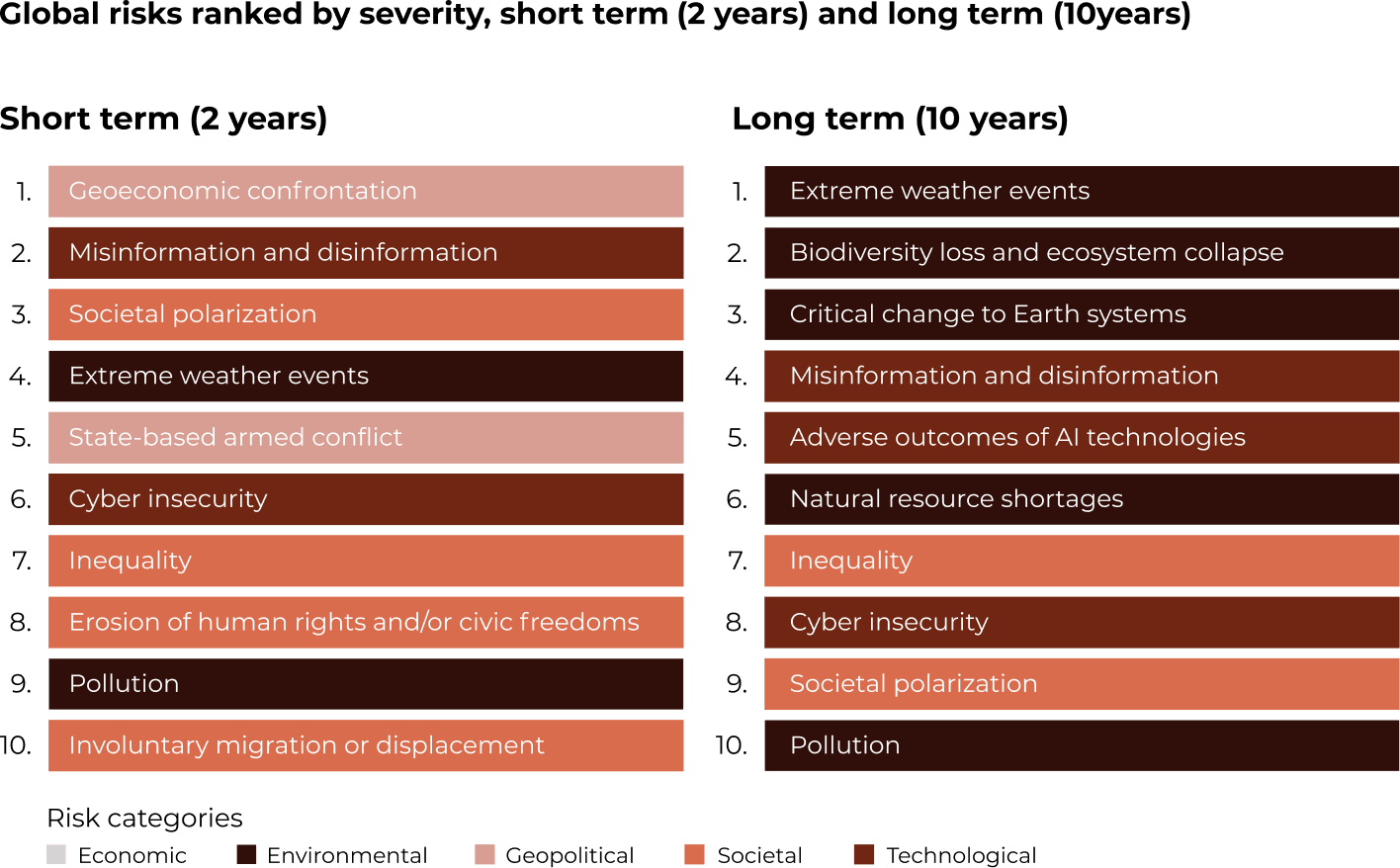
The world is going through a period of extraordinary disorder that is symptomatic of a period of seismic change. Environmental stresses are an established, if secondary, contributor to conflict risk, and that risk is projected to grow. Moreover, AI-enabled disinformation is widely viewed as a threat to social cohesion, with early evidence that it deepens existing divisions. Together, they are expected to compound the pressures on already fragile states and polarized societies. Yet the most visible geopolitical flashpoints are not necessarily the most consequential for every company. Lower-profile conflicts may intersect more directly with key suppliers, infrastructure, markets or assets. The Marsh 2026 Political Risk Report found that while significant, for many organizations, [Russia-Ukraine, Middle East and Taiwan] “may not actually be the most relevant… Leaders should ensure that risk teams are not overlooking lower-profile or seemingly less plausible conflicts that could have a more direct impact on operations.“
Sources: Marsh 2026 Political Risk Report, Marsh World Risk Review
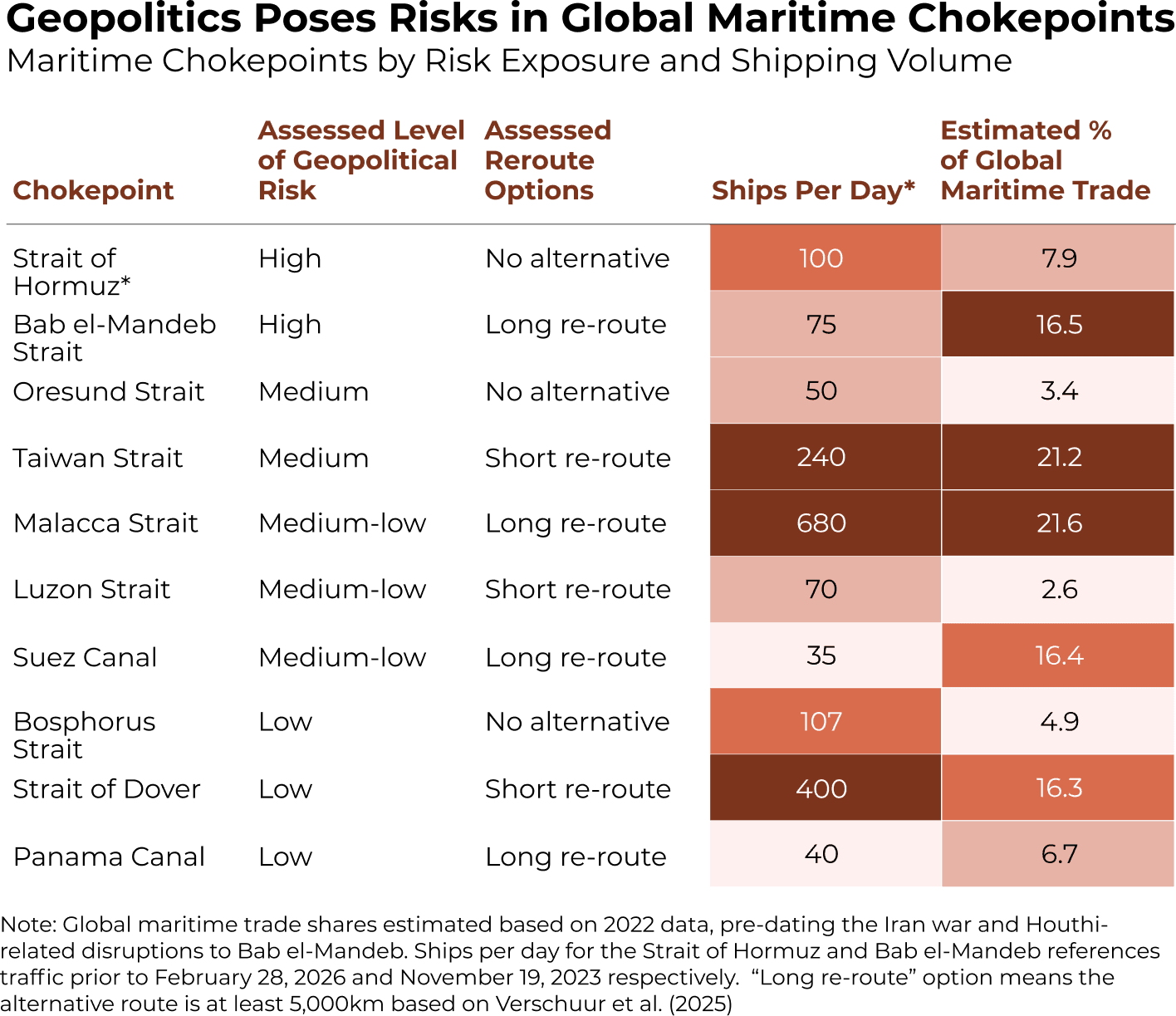
Source: Verschurr et al. (2025), IMF PortWatch, other publicly available sources, Bloomberg Economics.
What level of trade friction should we assume is the new normal?
Tariffs increasingly look less like a temporary trend and more like a recurring feature of the operating environment. Marsh’s 2026 work on North American trade argues that businesses should not expect a return to the pre-2025 status quo of policy stability; even under different USMCA outcomes, companies may face a persistently higher-friction environment shaped by tariffs, regulatory intervention and shifting bilateral priorities.
Source: Rewiring Supply Chains In A Realigning World, Oliver Wyman Forum
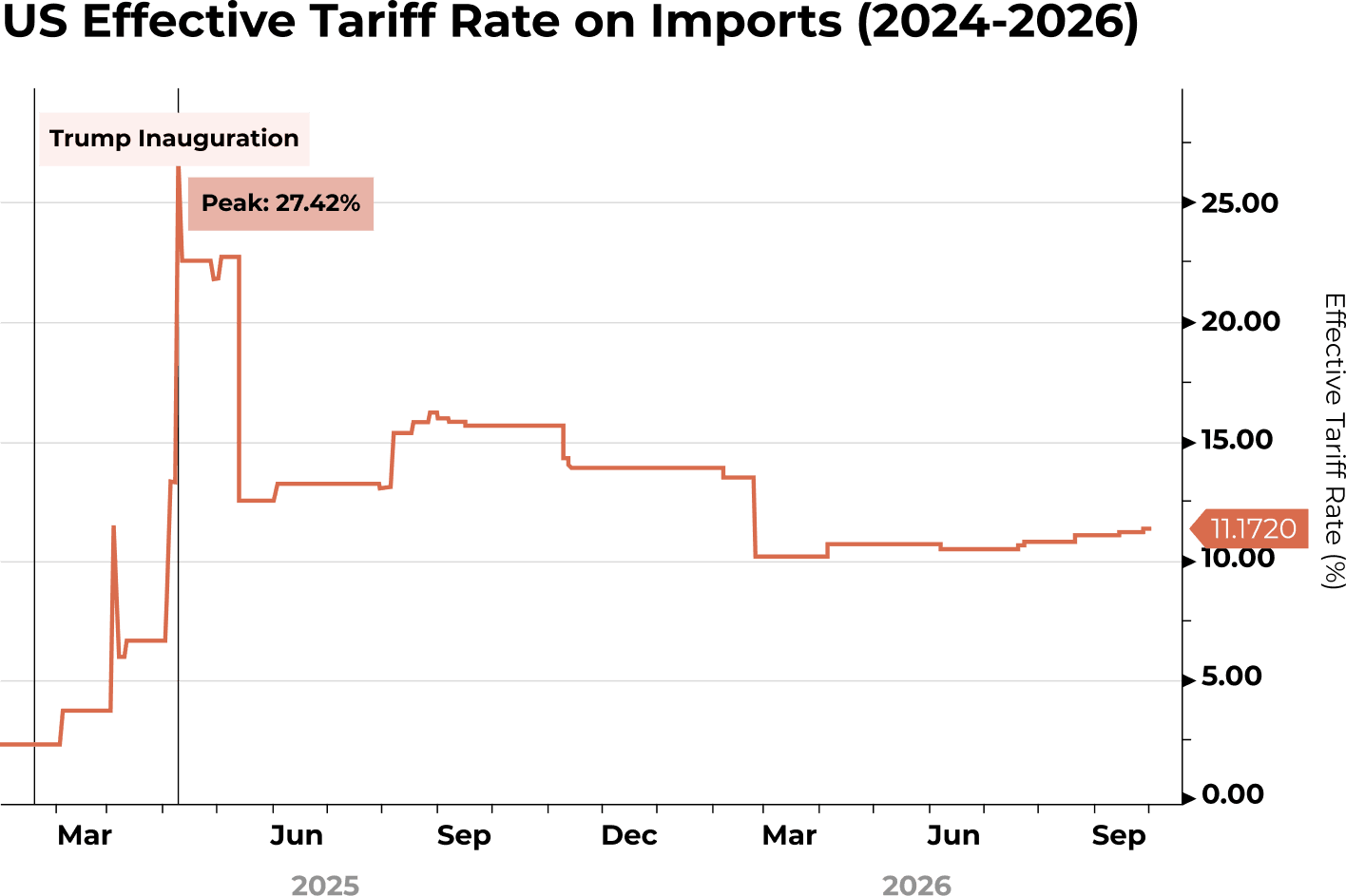
Source: Bloomberg Economics
The implications can also take years to work through a business. Marsh notes that in healthcare, tariff-related cost increases may phase in over several years because of common three-year contracting cycles, and that secondary effects — including labor costs and supply constraints — may ultimately matter more than the initial tariff itself. For CEOs, the decision is therefore not simply how to respond to the tariff in place today, but what range of trade friction should be built into sourcing, pricing, contracting and capital-investment decisions over the next several years.
Which markets are strategically important enough to stay in even if political risk rises?
Geopolitical resilience does not always mean reducing exposure. In some markets, the growth opportunity may justify accepting greater political, regulatory or operational risk. For example, in China, many American businesses chose to deal with the increased tariffs rather than endure the cost of shifting operations and building new facilities. The harder question is whether that exposure is deliberate or simply inherited. Decision-makers should know in advance what would cause them to invest more, freeze investment, scale back or exit.
Source: Marsh 2026 Political Risk Report
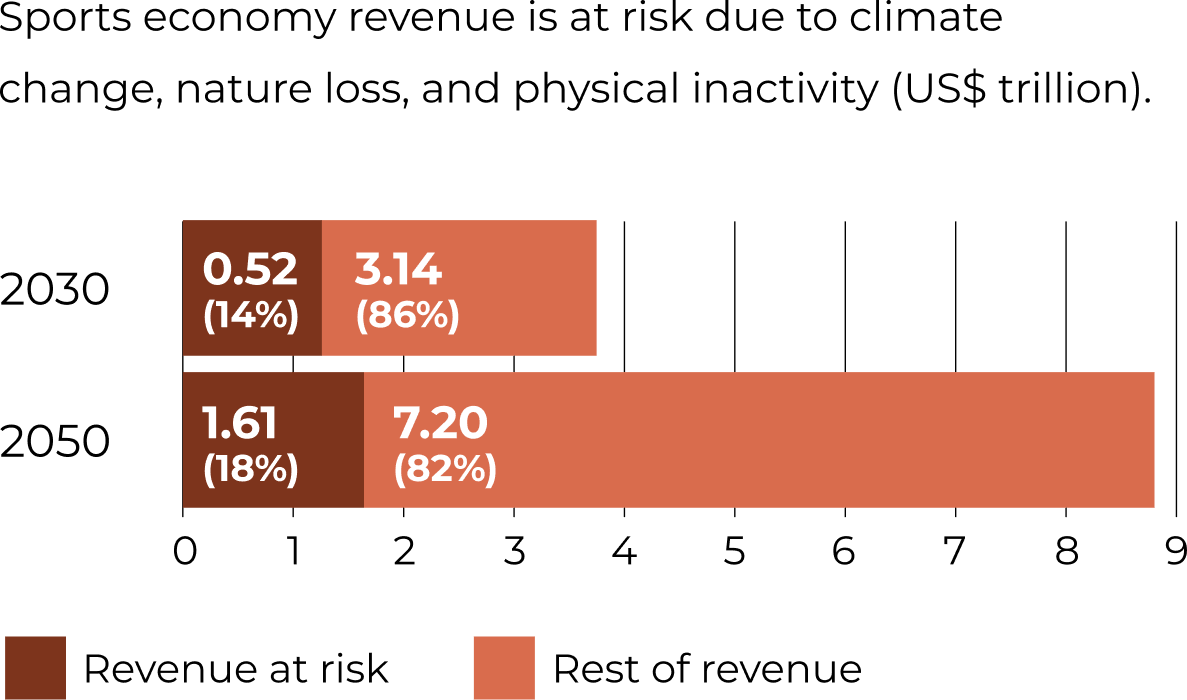
Physical hazards can quickly become strategic business issues. Extreme heat, flooding, wildfire, drought, water scarcity and other natural hazards can disrupt assets, infrastructure, employees, suppliers and customers.
For top leadership, the central question is increasingly how much physical-hazard exposure the organization is willing to carry and how it will manage that exposure. Leaders will need to decide where to build, relocate or reinforce assets; when to invest in adaptation; and when insurance or operational safeguards are sufficient.
These are not merely facilities or risk-management decisions. They can affect capital productivity, insurance costs, workforce continuity, supply reliability, market access and long-term competitiveness. Competitive resilience requires treating physical exposure as a strategic variable, not simply an operational constraint. The strategic question is no longer solely how companies mitigate their environmental impact. It is also how they adapt to a changing physical and economic environment.
How much are we willing to spend today on adaptation for a disruption that may not happen for years?
Protection is possible for many hazards, but not all, and not completely. Some risks can be reduced through site hardening, backup power and relocation of critical assets. Others can be shared through insurance, though the availability and cost of coverage are themselves useful signals of how the market views the risk. What remains must be handled through preparation and response. Leadership should assess action items against the risk profile, ranking each by the harm it would prevent, its cost and how quickly it can be done.
Source: Sports for People and Planet, World Economic Forum and Oliver Wyman Forum
Which assets should be protected, which should be made redundant and which should we ultimately relocate rather than keep investing in?
Marsh analysis shows that economic losses from natural disasters in the past 10 years have totaled $2 trillion. That scale of loss underscores the material risk natural hazards can pose to physical assets, but decisions about individual assets require evidence, not assumptions. Relocation is one possible response, but it should be the last option tested, not the first. Alternatives include hardening existing facilities, relocating only the most critical functions, building geographic redundancy and transferring risk through insurance. Any move should be weighed against the hazards of the new location, the effect on employees and the cost of disruption. The analysis should also look beyond company-owned property to the power, water, telecommunications and transportation networks that operations depend on.
Leadership can mandate an analysis of climate threats to people, infrastructure, and customers and clients. The analysis should cover both chronic trends, such as rising heat, sea level and drought, and acute events, such as floods, storms and wildfires. Because historical patterns are a weakening guide to future exposure, the analysis should rely on forward-looking projections and not on past experience alone.
Which assets are critical enough to warrant intensive contingency planning, and where is a lighter-touch approach warranted?
The appropriate level of physical-hazard contingency planning will be determined by the organization’s stated risk appetite, the criticality of the assets and functions exposed, and the cost of action relative to the cost of disruption. Planning should be scaled to the risk. Facilities and functions with high exposure warrant detailed plans, regular exercises and named owners, while lower-risk areas may need only a basic continuity plan and periodic review.
Cloud infrastructure, software platforms, AI systems and third-party technology providers now underpin many critical functions. Digital resilience has become central to every other part of an organization.
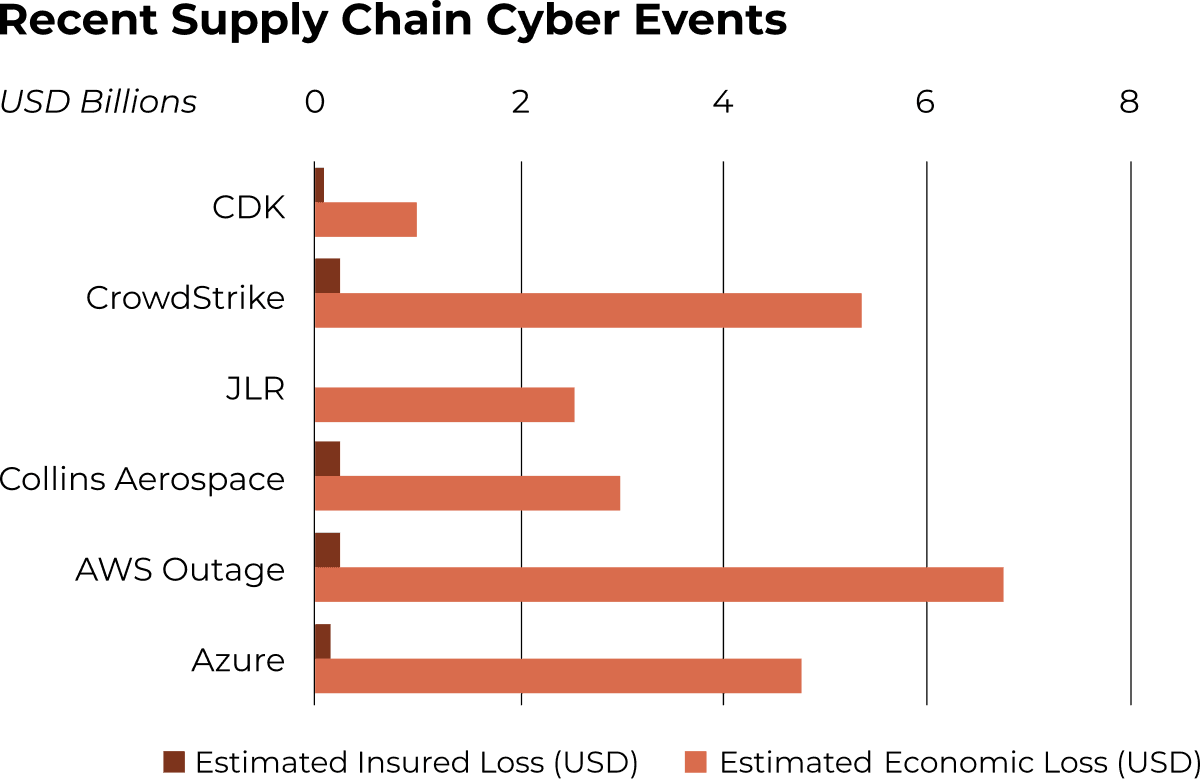
Digital resilience means organizations are prepared to operate, serve customers, protect data and recover efficiently in the face of technological disruptions. It also sets them up for success by giving them the flexibility to adapt as technologies, threats and dependencies evolve. The challenge for many organizations will be to identify the digital dependencies that matter most and invest accordingly. As more critical functions become digitally dependent, resilience is increasingly a question of where organizations have concentrated risk, which systems and providers they cannot operate without, and whether they have viable alternatives when those dependencies fail or are compromised.
Rapid AI adoption, particularly generative and agentic AI adoption, is creating new decisions around markets, workforce, governance, security and competitive speed. Generative AI is also changing the nature and scale of familiar risks. AI-generated phishing, voice clones and deepfakes are making traditional signals of fraud less reliable, increasing the importance of verification procedures that do not depend solely on recognizing a familiar voice, face or writing style. Agentic AI introduces a different challenge: systems that can access files, send communications or execute transactions on an organization’s behalf can expand the attack surface and require clear permissions, controls and oversight.
Similarly, the speed of advancements in quantum computing have led to predictions that cryptographically relevant quantum computers may be feasible by the end of the decade, which could eventually threaten some of today’s widely used encryption methods. While the timing and scale of that risk remain uncertain, organizations with long-lived sensitive data or complex technology infrastructure may need to begin understanding their exposure and the potential transition to quantum-resistant cryptography.
In the digital age, every part of a business is a digital one. From suppliers to workforce management and accounts payable, understanding the vulnerabilities and resilience of digital infrastructure is central to operating today and being prepared for the shocks of tomorrow. That requires looking beyond cyber defense alone to the resilience of the broader digital operating model: where critical systems sit, who controls them, what third parties they rely on and how the business would continue if they became unavailable.
In October 2025, a cloud platform outage lasted roughly 15 hours and disrupted hundreds of companies. Bloomberg noted that the episode highlighted the degree to which internet services and businesses have become dependent on a small number of cloud providers.
Source: Marsh Re
For CEOs, the central question is not whether technology will fail or change, but whether the business has made deliberate choices about its most important digital dependencies and can continue operating when they are disrupted.
Where do we need to move faster on AI even if doing so creates new risks?
AI, quantum computing and other cyber threats are evolving on different timelines, which makes it difficult to know where to invest first. Some risks warrant immediate action because delay could create lasting exposure; others may be better suited to pilots or continued monitoring. The strategic question is how to distinguish between the two.
Leadership should weigh each investment against the severity of the threat, cost, time to value, reliance on outside vendors, reversibility and legal or regulatory exposure. That assessment should make explicit which capabilities need funding now, which can be tested and which risks the organization is prepared to accept for the time being.
The harder part is governance. If cyber, technology and legal teams each assess their own priorities, every issue can begin to look urgent. Clear ownership and cross-functional review oversight is needed to ensure that investment decisions reflect enterprise-wide priorities, rather than the interests of any one function.
Source: Global Risks Report 2026
If our core systems were compromised tomorrow, what parts of the business would still be able to operate?
A cyberattack can quickly become more than a technology problem. Ransomware, data loss or the failure of a critical system can interrupt payments, production, customer service, communications and decision-making across the organization. The strategic question is therefore not simply whether the company can prevent an attack, but which activities must continue if prevention fails.
Backups are only useful if they are current, protected from the same compromise and capable of being restored quickly enough to matter. Leadership should know which systems and data are most critical, how long the business can function without them, what must be restored first and where manual or alternative processes can keep essential operations running in the meantime.
Operational resilience is, of course, about whether an organization can keep functioning when normal conditions break down. For CEOs, that means deciding how much redundancy, liquidity, inventory and recovery capacity to maintain across critical operations. It also means understanding dependencies on suppliers, infrastructure and energy systems that may appear efficient in stable conditions, but can become strategic vulnerabilities during disruption. Done well, it is not merely defensive: it enables an organization to keep serving customers, invest through volatility and gain ground while less-prepared competitors retrench.
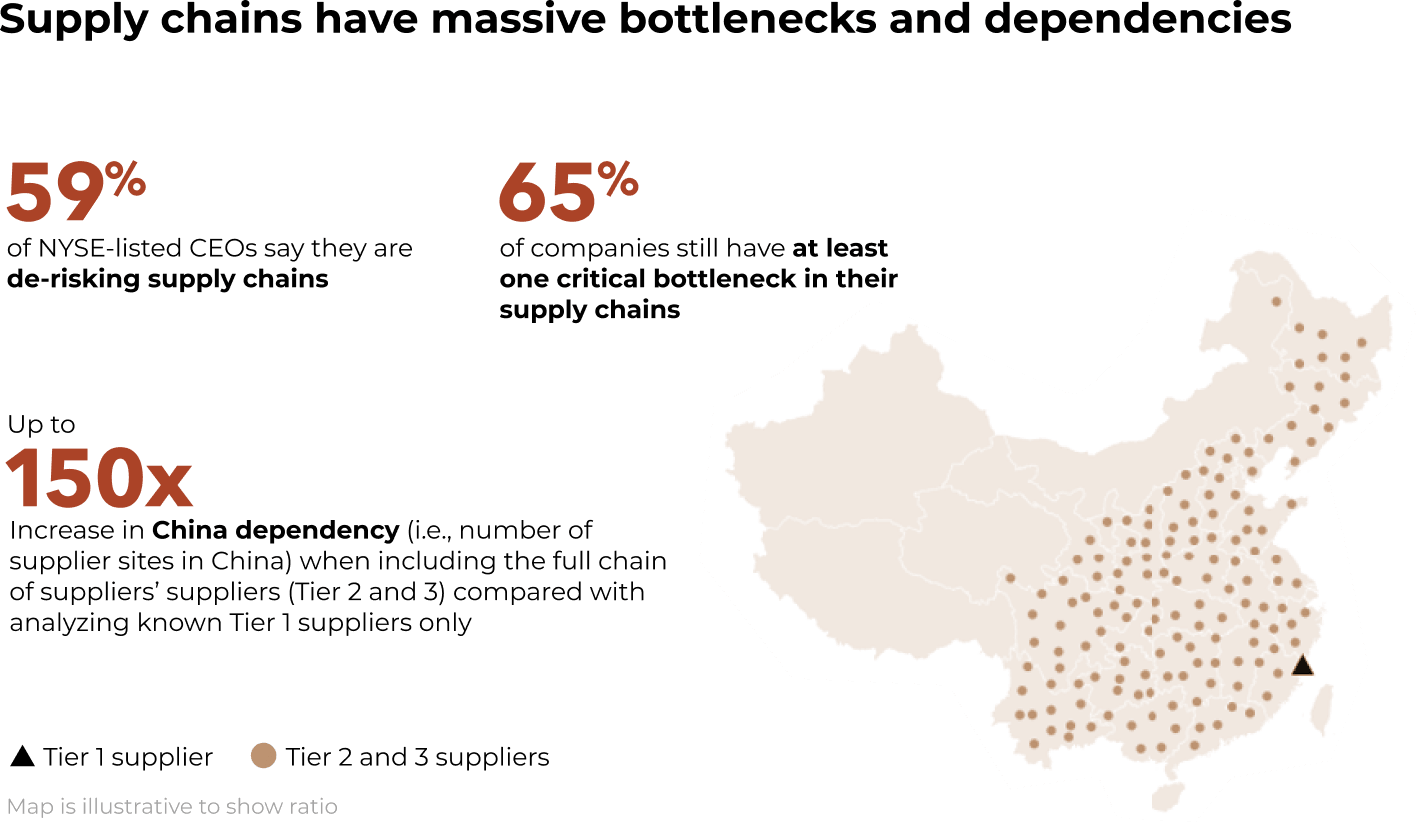
The challenge is becoming more acute as companies operate through increasingly interconnected supply chains and infrastructure networks. Marsh data indicates that 65% of organizations have at least one single point of failure hidden in their upstream supply chain, while roughly 90% have more than five suppliers located within the same 50-kilometer radius. These concentrations turn localized events into wider business-continuity problems and make redundancy, alternative sourcing and recovery planning strategic, rather than purely operational considerations.
Understanding vulnerabilities, identifying alternatives and planning for reduced-capacity “crisis operations” have moved beyond the remit of the business-continuity team and into the C-suite. Executives increasingly need to understand where the critical dependencies lie and which trade-offs they are willing to make.
These trade-offs are between efficiency and optionality. Decisions about where to build capacity, which operations require backup, how quickly critical activities must recover and what infrastructure constraints the business is willing to accept can directly shape investment, growth and competitive position.
These are not simply risk-management or business-continuity decisions. They affect capital allocation, working capital, production economics, investment location, customer reliability and, ultimately, competitive position. They also represent an opportunity.
How do we understand the difference between ordinary obstacles and those that require a shift to some different type of operations?
Not every disruption warrants a crisis response. Treating every problem as a crisis can exhaust people, slow decision-making and weaken judgment when a truly consequential disruption occurs. Leadership therefore needs to define what level of disruption should be absorbed through normal operations, and what conditions should trigger a different operating model, decision structure or level of executive attention.
When does a crisis become the new normal? How does that change things?
Many organizations can withstand a disruption lasting days, but are far less prepared when it stretches into weeks, months or longer. The constraints also change over time: inventory runs down, suppliers become constrained, liquidity tightens and employees fatigue. The strategic decision is how much endurance the company needs in its most important operations before a prolonged disruption begins to threaten customer commitments, growth or competitive position. That question becomes more consequential when critical dependencies are hidden upstream.
How can resilience measures be used to improve overall business operations?
In every crisis comes an opportunity. Challenges to supply chain and human capital that are addressed as a means to make a business more resilient have the ability to add to overall robustness of operations in non-crisis situations. Understanding alternative sources of material, facilities and talent can all add to the overall health of a business.
Source: Rewiring Supply Chains In A Realigning World, Oliver Wyman Forum
Which critical operations justify the cost of additional redundancy or recovery capacity?
Redundancy, backup capacity, inventory and recovery capabilities all impose costs during normal conditions. The question is where those costs are justified by the consequences of prolonged interruption. Leadership should be explicit about which operations require greater protection and which can tolerate slower recovery or temporary loss of capacity, rather than allowing those outcomes to be determined by legacy operating choices.
Every resilience strategy ultimately depends on people. When conditions change quickly, leaders and teams still have to interpret incomplete information, make trade-offs and act under pressure. The central question is whether an organization has built the leadership capabilities, decision structures, talent pipelines and incentives that allow people throughout the organization to respond effectively when circumstances change.
Communicating with stakeholders is a key consideration in resilience, and it begins long before a crisis happens. Clear and consistent messaging to your team, your clients and business partners establishes trust. But trust is built through more than communication alone; it is also shaped by whether stakeholders see consistency between what an organization says and does, and whether employees feel genuinely invested in its direction and success. That reservoir of trust gives leaders greater credibility when they need to ensure stakeholders listen, believe them and act. The decline in societal trust in institutions, coupled with the proliferation of AI-driven “news” outlets, has amplified the challenge for leaders to build and maintain trust with stakeholder groups.
More broadly, a key question for CEOs is whether the organization has the skills, leadership structures and decision rights required to keep operating effectively under pressure. That includes whether critical knowledge is concentrated in too few people, decision rights are clear, succession is credible, and the workforce can adapt as technology and demographics reshape roles and capabilities.
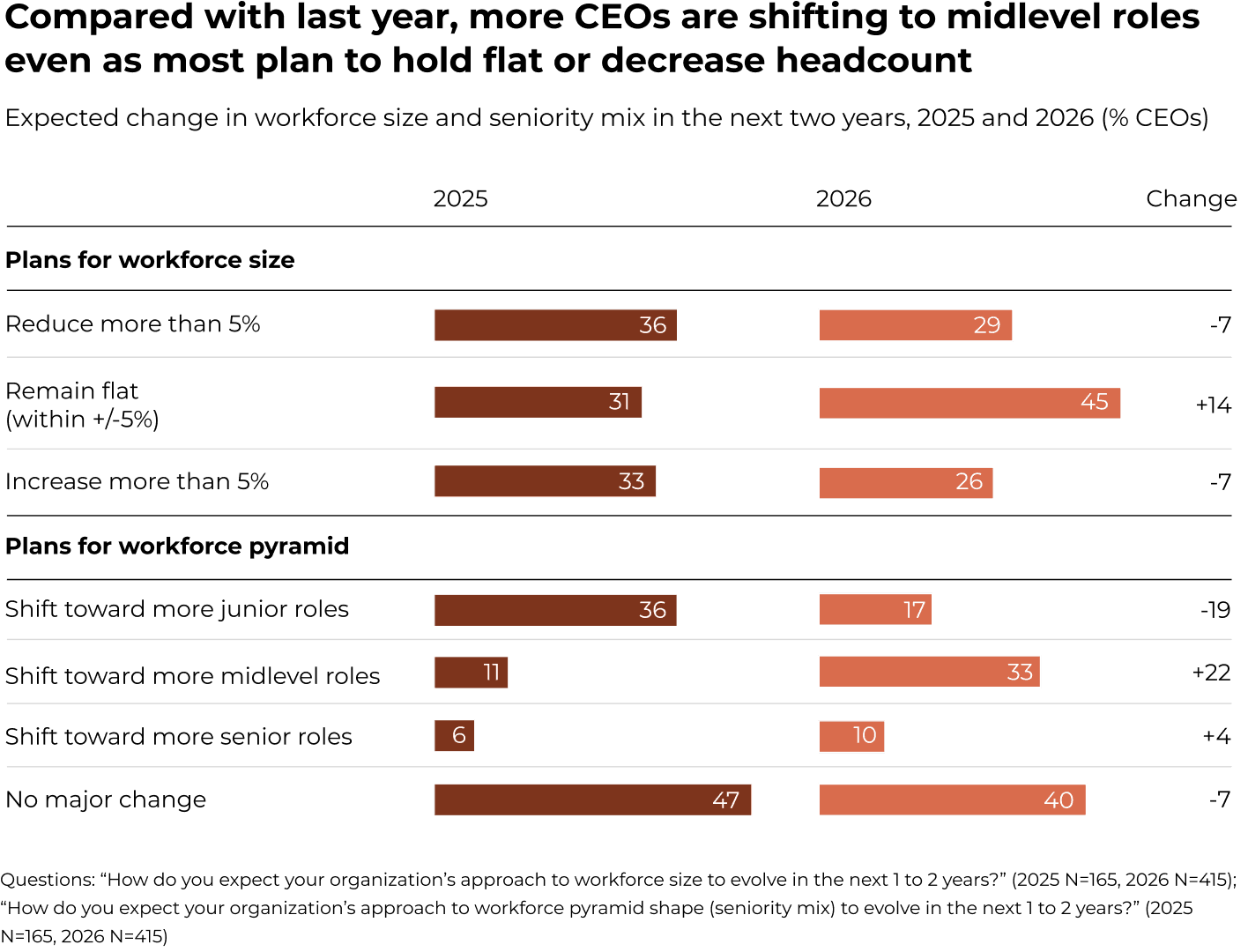
AI is accelerating the need to rethink how organizations build and deploy talent. As roles change, resilience will depend not only on acquiring new technical skills, but on preserving pathways for employees to develop judgment, institutional knowledge and leadership experience. Companies that automate or eliminate too many entry-level and developmental roles may create short-term efficiencies while weakening the pipeline of people able to take on greater responsibility during future disruptions. Marsh’s 2026 Global Talent Trends report found that 65% of executives expect 11% – 30% of their workforce to be redeployed or reskilled because of AI over the next two years, while 54% of C-suite leaders identify talent scarcity as the leading force shaping their people plans.
Building capable second-level management and empowering teams below the executive level is therefore a core resilience tool. Ensuring junior- and mid-level staff have the right skills to function in a crisis is an integral part of ensuring continuity of operations during crisis situations and longer, extended operational shocks. Building on the efforts of the United States military in the post-Gulf War era, organizations must invest in junior-level staff to be able to adapt to unfolding crisis situations. A US Army War College study observed that a lesson from Operation Iraqi Freedom was that junior-level staff is capable of leading under chaotic circumstances. This has been enshrined in US and allied military doctrine. The private sector can embrace this approach as it confronts the changes and challenges ahead. This investment gives employees live opportunities to manage issues of consequence, including the challenge to succeed and fail.
Resilience depends not only on having the right talent, but on building an organization that can make decisions quickly, redeploy people and maintain confidence through disruption.
Are we automating away the jobs that create our next generation of leaders?
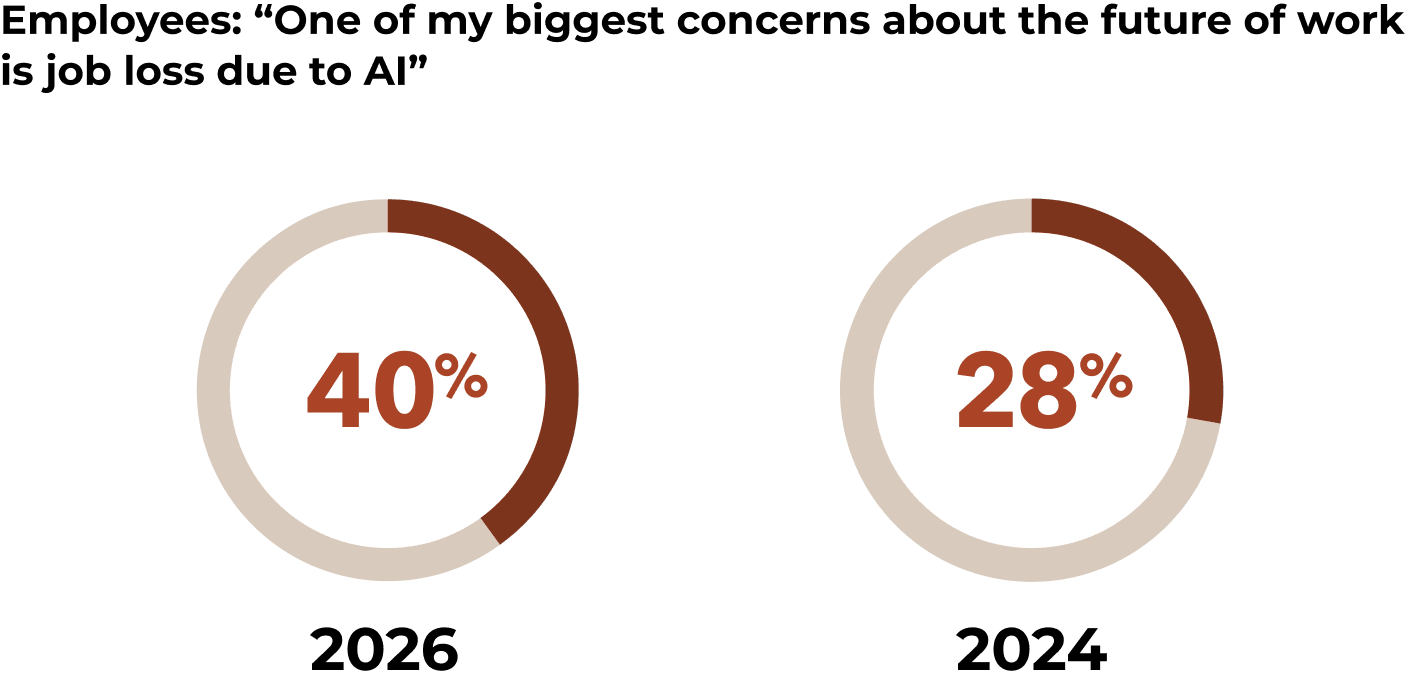
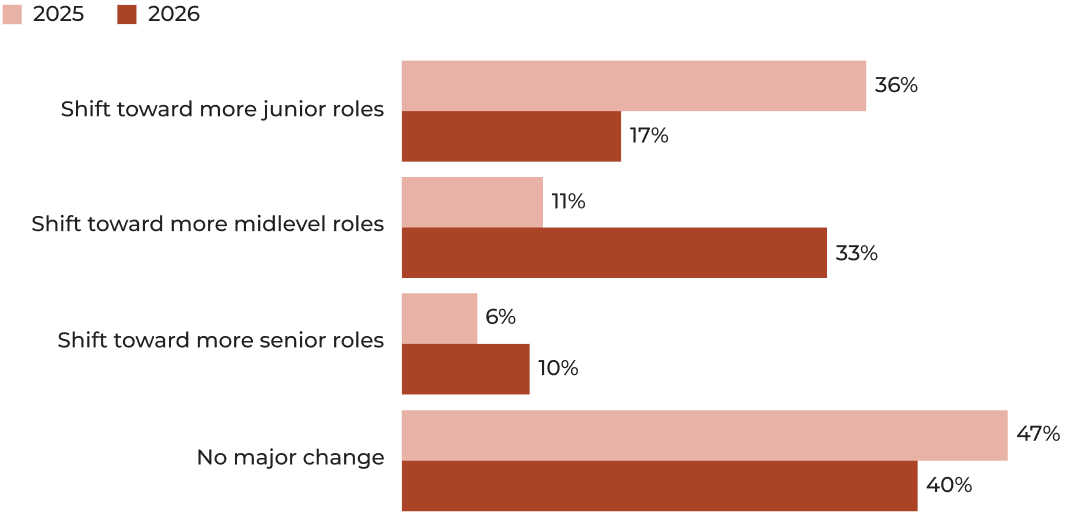
AI is reshaping not only which skills companies need, but also the pathways through which employees gain judgment, institutional knowledge and leadership experience. The Marsh 2026 Global Talent Trends report found 99% of executives surveyed expect AI will lead to some headcount reductions within two years, and 40% expect to reduce junior roles, while increasing the share of mid- and senior-level positions. Additionally, the report uncovered that 40% of employees surveyed in 2026 felt that one of their biggest concerns about the future of work is job loss due to AI, up from 28% in 2024. The risk is that companies improve near-term efficiency, while weakening the developmental pipeline that produces future leaders.
Source: Marsh 2026 Global Talent Trends
Are we involving the workforce in reinventing work and equipping them with the space and resources to up/reskill? Are we building the next generation of leaders able to step into leadership roles in times of crisis?
People can become single points of failure just as easily as suppliers or systems. Resilience depends on whether authority is clear, critical knowledge is transferable and others are prepared to act when senior leaders are unavailable or overloaded. Marsh’s 2026 People Risk research identifies inadequate supervisory and leadership skills as the risk factor that triggers or worsens other people’s risks more than any other, underscoring that leadership depth is itself a resilience control. Rapidly changing technology and work processes exacerbate this challenge: only 32% of surveyed C-suite executives believe that their workforce can effectively combine human and machine capabilities.
Source: Oliver Wyman Forum x NYSE CEO Survey 2025 and 2026; Oliver Wyman Forum analysis
Will our stakeholders believe us when facts are contested and trust is under pressure?
Trust is built before the crisis, not during it. Employees, suppliers, partners and customers each hold a running assessment of whether leaders tell them the truth, on time, even when it’s inconvenient. In peacetime, that means a consistent cadence, plain language and the same core message across every audience, so a shock doesn’t force a need to invent a voice under pressure. If stakeholders only hear from top leadership when they need something, they will read the first crisis statement as spin.
Communication planning must also be deliberate about time horizons. In the first 72 hours, speed and a small set of verified facts matter most. In the following weeks, regular updates and visible corrective action matter most. Over the long term, accountability and proof that leaders have changed matter most.
Source: Oliver Wyman Forum x NYSE CEO Survey 2026
Learn more about the Bloomberg New Economy Competitive Resilience Coalition here.