

Multi-Stakeholder Private-Public Alliance Mobilizes Biden-Albanese Talks to Transform Cancer Care
Multi-Stakeholder Private-Public Alliance Mobilizes Biden-Albanese Talks to Transform Cancer Care
New York January 30, 2024 – Following President Biden and Prime Minister Albanese’s announcement of U.S.-Australia cooperation in innovative technologies, a U.S.-Australia Cancer Consortium was formed, focusing on pioneering cancer care collaboration.
In a state visit last October, President Biden and Prime Minister Anthony Albanese of Australia heralded a new era of bilateral cooperation. The joint announcement spotlighted breakthroughs in biotechnology, advanced batteries, quantum computing, cybersecurity, and more. A highlight was the launch of an AI initiative aimed at revolutionary and responsible research in areas like cancer, pandemics, natural disasters, and hunger.
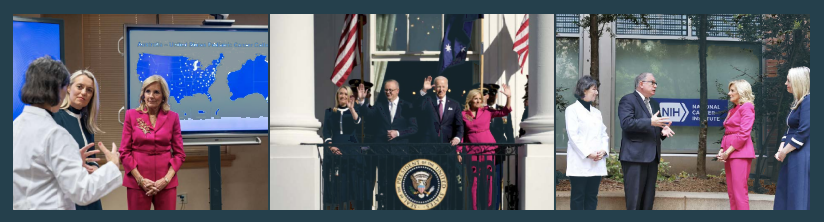
Australian Prime Minister Albanese Official Visit with State Dinner to the United States, October 24, 2023; Parallel to these developments, First Lady Dr. Jill Biden and Ms. Jodie Haydon of Australia underscored this commitment with a visit to the NIH Clinical Center and a pediatric oncology lab at the National Cancer Institute
The U.S.-Australia Cancer Consortium, a public-private partnership catalyzed by Bloomberg New Economy and Asia Society, and further propelled by a generous donation by Australian philanthropists Mr. and Mrs. Poche, comprises key representatives from Memorial Sloan Kettering, White House Cancer Moonshot, Australia’s NSW Government and national science agency CSIRO, Bloomberg New Economy International Cancer Coalition, McKinsey, Royal North Shore Hospital and Ramsay Health Care. This consortium explored themes in cancer care collaboration between the U.S. and Australia, focusing on innovative cancer treatments.
From the topics presented by Memorial Sloan Kettering and discussed by the consortium, it was determined that international data sharing with a cloud-based system for collaborative research, liquid biopsy as a leapfrog technology to expand access to clinical trials, paradigm shifting early intervention clinical trials, remote radiation oncology, international molecular tumor board, and educational and training initiatives could be early successes in collaborative trials. Immediate next steps include follow-up conversations and working groups to explore international data sharing mechanisms while advancing the individual pilot studies with real-world data and technology integration.
Additionally, the issue of communities with poor access to the best possible therapies, largely due to implementation issues, was flagged as profoundly important and often overlooked. As crucial as technological advances and solutions are, deployment and implementation also need to be addressed. There is a growing awareness of the disparities in cancer burden, screening, diagnosis, and treatment outcomes, especially among indigenous populations and underserved minorities in the U.S. and Australia. Addressing these disparities is vital to ensuring equitable healthcare for all people.
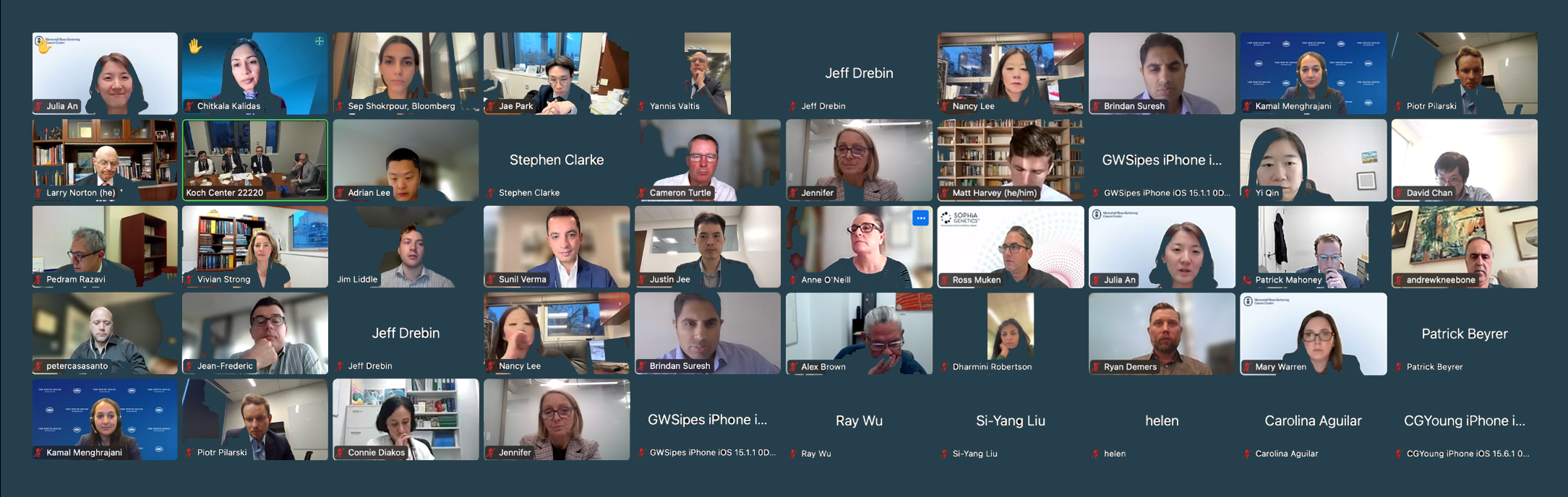
US-Australia Cancer Consortium, Virtual, January 25th, 2024
This U.S.-Australia collaboration represents a monumental step towards innovative cancer treatment approaches and a commitment to equitable healthcare solutions globally.
About the Bloomberg New Economy International Cancer Coalition
The Coalition, established in 2021, represents a groundbreaking international multi-stakeholder private-public collaboration among academia, industry, government, patient advocacy groups, and policy think tanks. This alliance is dedicated to leveraging technology and fostering synergistic collaborations, with a core aim of enhancing patient access to clinical trials worldwide. A key focus is the harmonization of regulatory practices, driving forward the global mission of accelerating cancer cures and prevention in the post-pandemic era.
Central to it’s mission is the establishment of thought leadership and the commitment to addressing the most pressing challenges in clinical cancer trials. We have identified four pivotal pillars all explored through the lens of Global Health Equity:
- Increase equitable access to testing by improving diagnostics infrastructure and data sharing across the patient journey
- Promoting patient-centricity by optimizing clinical trial protocols and implementation
- Regulatory harmonization to lower barriers to patient centric care globally
- Building public awareness & patient empowerment through education
The Coalition generates insightful white papers and convenes impactful discussions on these key areas. Our efforts are geared toward creating a comprehensive blueprint and serving as a guiding force for the industry, aimed at shaping the future landscape of cancer trials. This initiative not only reflects our commitment to innovation and excellence in healthcare but also underscores our dedication to transforming the lives of patients worldwide.
Resources:
White House Press Release
Bloomberg New Economy International Cancer Coalition