

Does Your City Have a Sustainable Future? Here’s the Answer
The following is an English translation of an article originally published on FT Chinese, written by Fanyu Lin, a member of the Dynamic Cities Coalition. Read the original article.
Real estate in cities has often been seen as mere assets with price tags, rather than human-centered environments designed to meet the needs of residents. This is changing.
The pace of urbanization worldwide is increasing and is only expected to accelerate to 70% of the global population through 2050, by which point some 7 billion people are expected to be living in cities. How can the world manage this influx in a sustainable way that ultimately leads to a better quality of life for humanity? In the latest episode of the Global Leadership Conversation Series, I spoke with three key voices from the Bloomberg New Economy Dynamic Cities Coalition—Mikkel Bülow-Lehnsby, co-founder and chairperson of Urban Partners; Dr. Lola Woetzel, senior partner emerita of McKinsey & Company and a former director of the McKinsey Global Institute; and Elizabeth Gonzalez, director of community innovation at Bloomberg—to discuss the future of urban development. “It’s surprising when you think about it,” Bülow-Lehnsby remarked, “we have thousands of years of experience creating cities, yet there are few systematic approaches for doing it well, despite the wealth of knowledge available globally.” The conversation centered around the newly launched Dynamic Cities Dashboard, a multi-year project uniting the world’s leading architects, urban planners, developers, current and former government officials, innovators, social entrepreneurs, corporate representatives, financiers, and city experts to reestablish standards and practices for better urban environments.
Mikkel, who joined the coalition as co-chair, has dedicated the past two decades to the real estate sector with a passionate focus on transforming urban spaces. His insights highlight a critical gap: real estate in cities has often been viewed and treated as mere assets with price tags rather than as human-centric environments designed to meet the needs of their inhabitants. His vision led to the founding of Urban Partners, with a mission to be the most competent investor in the urban value chain. Mikkel explained that we can instinctively recognize a well-functioning, holistic, green, and thriving city where we feel at home and at ease. However, a systematic framework is still lacking to guide decision-makers in creating such exemplary cities.
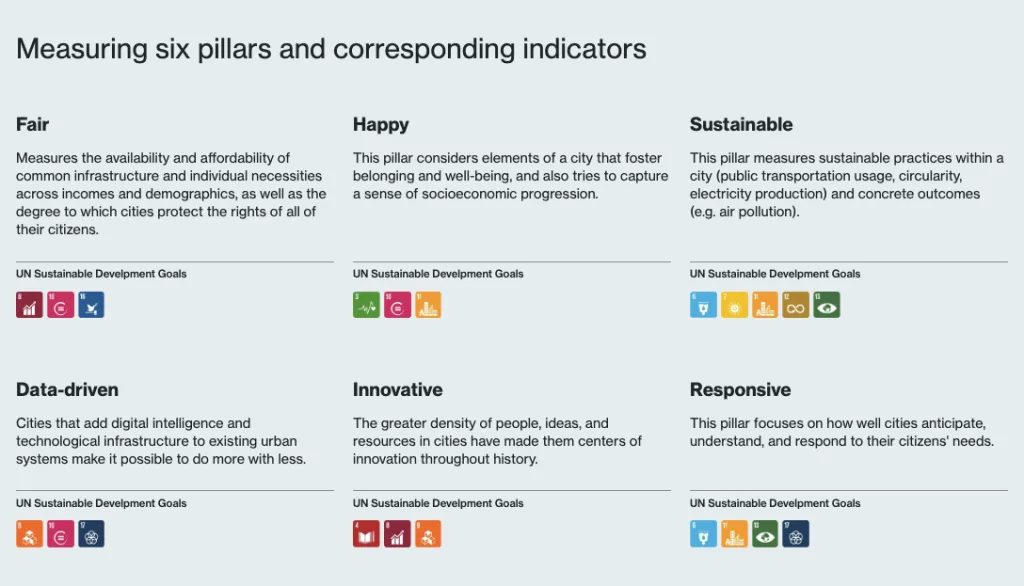
The Dynamic Cities Dashboard aims to bridge this gap by acting as a vital resource for city and business leaders, fostering decisions that universally lead to better urban environments. Elizabeth elaborated that the pillars in the dashboard offer a holistic view of what makes a city great. Guided by the principles of the Bloomberg New Economy Dynamic Cities Framework, published in 2021, cities are assessed based on pillars that ensure stability (Fair, Sustainable, Happy) and those that drive change (Innovative, Data-driven, Responsive).
Investor’s Perspective on Urban Development
From an investor’s standpoint, Mikkel emphasized the importance of balancing multidimensional returns on investment beyond traditional financial considerations that often overlook the social dimensions and externalities associated with urban development. For example, while financial metrics such as rental prices and economic activity are well-covered, the social dimensions, such as the quality of social interactions and inclusivity, and externalities that impact the environment, are often neglected. Investments in public parks and green spaces, although not immediately profitable, generate long-term value for cities.
According to Mikkel, good returns to investors, particularly better risk-adjusted returns, are linked to creating better urban environments. The challenge lies in the short-term evaluation of financial success on a plot-by-plot basis. Using the example of cities envisioned as 300-year ‘products’ for their citizens, Mikkel explained that when urban areas are sold to multiple developers focusing on short-term gains, the cohesive vision of a long-lasting, thriving city is lost. This approach results in value destruction and fails to create sustainable urban environments that would ultimately offer better financial returns in the long run.
The Happiness Pillar: Measuring Urban Well-Being
Building on Mikkel’s emphasis on green spaces and parks, Elizabeth pointed out that the happiness pillar of the Dynamic Cities Dashboard focuses on elements that foster a sense of belonging and well-being in a city, as well as capturing a sense of socioeconomic progression. Access to safe and inclusive public spaces can increase social cohesion, reduce crime, boost tourism, and improve environmental sustainability, as well as mental and physical health.
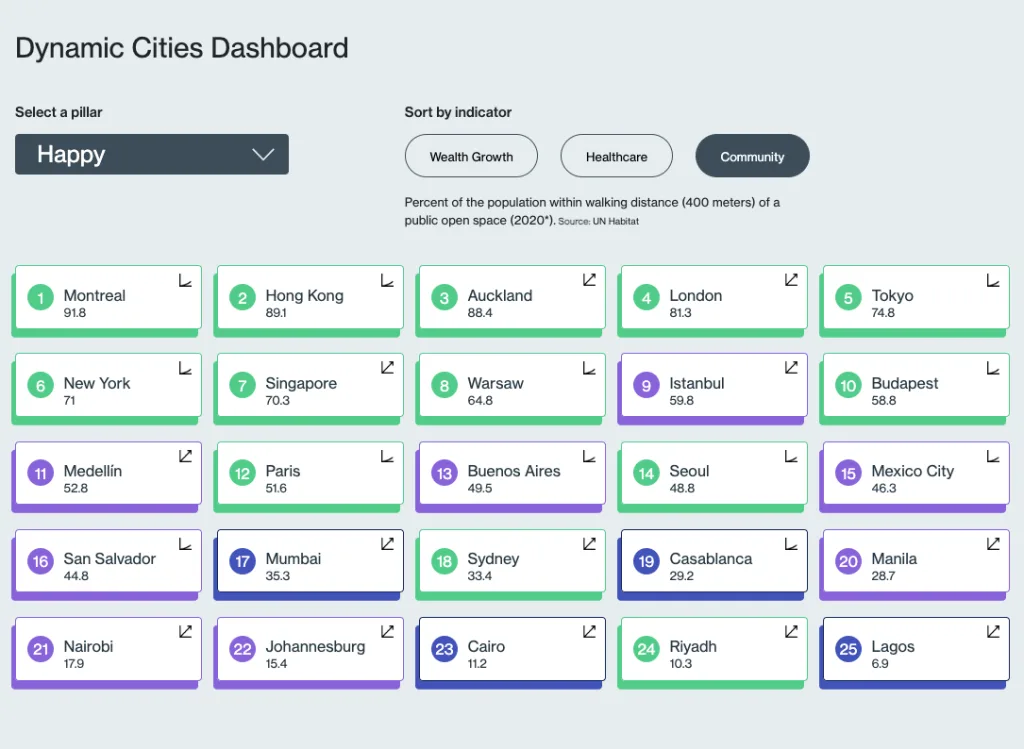
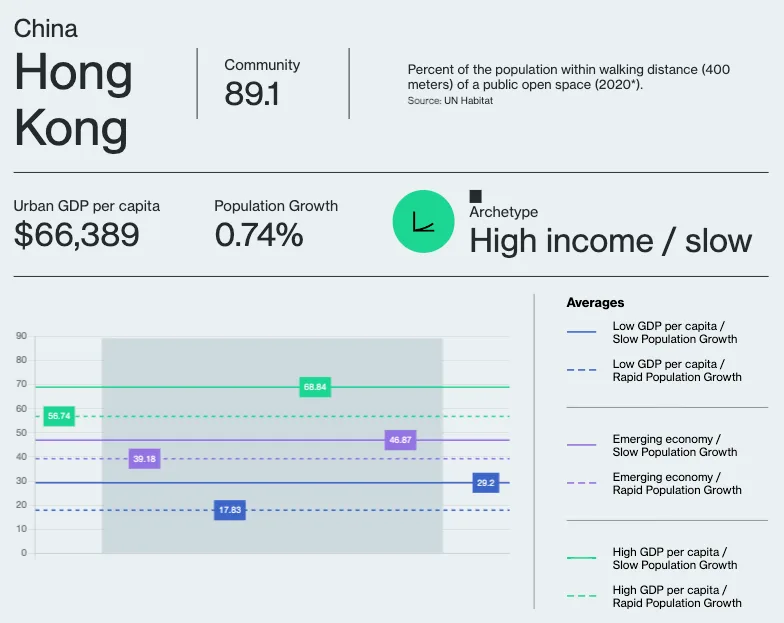
Elizabeth noted that one crucial metric we settled on was the percentage of the population living within walking distance of a public open space, as provided by UN-Habitat. Hong Kong, for instance, ranked positively in this area due to its abundance of public spaces, contrary to the perception that the city is only filled with dense skyscrapers.
Creating the dashboard was no easy task, Elizabeth explained. During the initial stages of the project, extensive research was conducted in collaboration with McKinsey to identify and track various indicators across a regionally diverse set of cities globally. Numerous metrics and parameters were defined for each pillar but ultimately narrowed down to a manageable set. The challenge was to find reliable and objective data that could be standardized for more than half of the cities; otherwise, the indicator would be disqualified.
This dashboard not only aims to provide a snapshot of city performance but also to motivate cities to pay more attention to data, fostering a culture of transparency and informed decision-making.
Future Urban Governance and the China Perspective
How does this framework for dynamic cities resonate with China—a country that has experienced unprecedented urbanization over the past few decades? Dr. Lola Woetzel, who has worked in China since 1985, reflected on the extraordinary transformation of China’s cities. “China has been through an amazing moment over the last 20-odd years where everything was possible. And I’d like to think that that moment will continue. My passion is for that moment—of creation, of reimagination for the good, for the development and further development of human potential.”
Lola specifically pointed to Shanghai’s rise as a global megacity: “There are mistakes and problems, but no city has done what Shanghai has done ever in the history of mankind. When I came to Shanghai, we had about 9 or 10 million people and a GDP per capita of $5,000. Today, we have 23 million people and a GDP per capita of $25,000.” The city’s rapid economic growth and significant rise in life expectancy underscore its evolution as a model of urban progress. From the cleanup of the Suzhou River to the transformation of Nanjing Road and the sustainable development of the West Bund, Shanghai exemplifies the ability to blend modernization with meaningful improvements in quality of life.
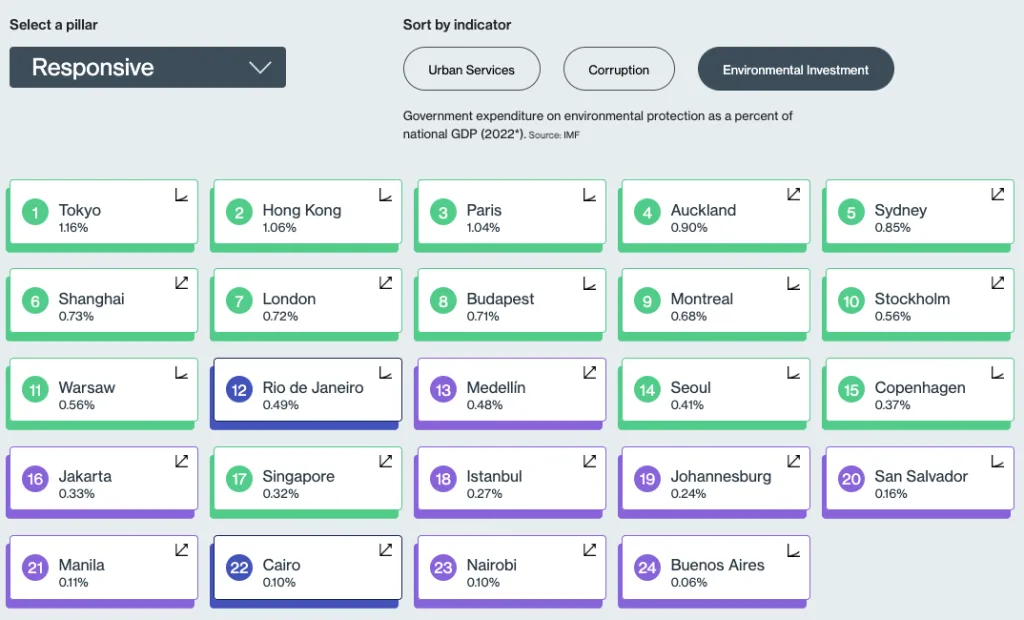
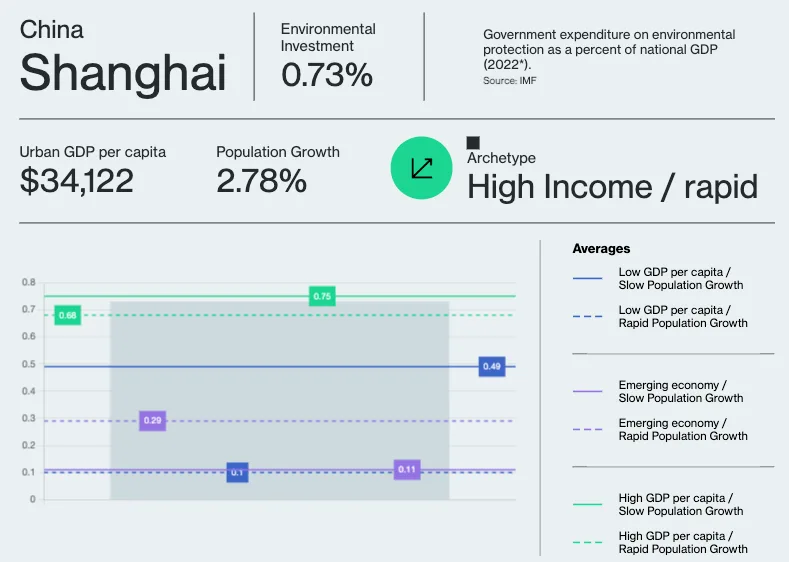
According to Lola, governance is a key factor in Shanghai’s success. The city’s decentralized model empowers local districts with decision-making authority while the city government maintains strategic oversight. Over the decades, Shanghai has developed multiple satellite cities to accommodate population growth while addressing the subsequent challenges, such as housing shortages, unemployment, congestion, and pollution. These districts operate with their own infrastructure, including universities, hospitals, banks, and construction companies, alleviating pressure on the urban core. The city government excels at coordinating across districts, ensuring that decentralization functions smoothly while maintaining accountability. This flexibility enables Shanghai to tackle complex challenges that many other cities struggled with. Through this governance model, Shanghai has successfully balanced rapid urbanization with the needs of its residents, fostering sustainable urban development.
In her view, urban governance is not just about managing services or responding to challenges; it is an expression of the city’s values, “I think dashboards and performance management are a characteristic of good governance. It basically says, this is what we care about.” A well-designed dashboard goes beyond data collection—it reflects the government’s core values and concerns. These dashboards also serve as crucial management tools, enabling cities to track their progress, identify problems, and spark deeper conversations about the underlying forces at work. More importantly, they help us better understand how cities function and evolve over time.
Furthermore, Lola stressed the role of governance in managing finances and implementing long-term solutions that balance financial returns with broader social benefits. While individual investors may focus on maximizing short-term gains, regulators have the responsibility to steer investments towards areas like affordable housing and climate initiatives. By integrating the real cost of neglecting these issues into financial systems, governments can create incentives for socially responsible investments. This approach has proven effective in places like Singapore, where housing policy was seen as crucial not just for economic development but, more importantly, for ensuring social stability. Similarly, post-World War II efforts in Germany, the Netherlands, and Vienna successfully addressed housing crises through collective financial structures. These examples show that with thoughtful governance, societal needs can be prioritized without sacrificing economic returns—demonstrating that long-term societal stability is often the bedrock upon which sustainable economic growth is built.
Dynamic Cities Need a Set of Dynamic Standards
The essence of the Dynamic Cities Dashboard is its focus on measuring progress rather than merely assessing performance and ranking cities. Elizabeth explained that by tracking progress through 7 of the 18 metrics, the dashboard captures changes between two points in time, allowing for a dynamic assessment of urban development and highlighting cities that show significant momentum. Cities are grouped into archetypes based on their unique contexts, considering factors like GDP per capita and population growth rates. This dynamic approach ensures that cities not only strive to meet current standards but also continuously evolve and find inspiration among their peers for ways to improve.
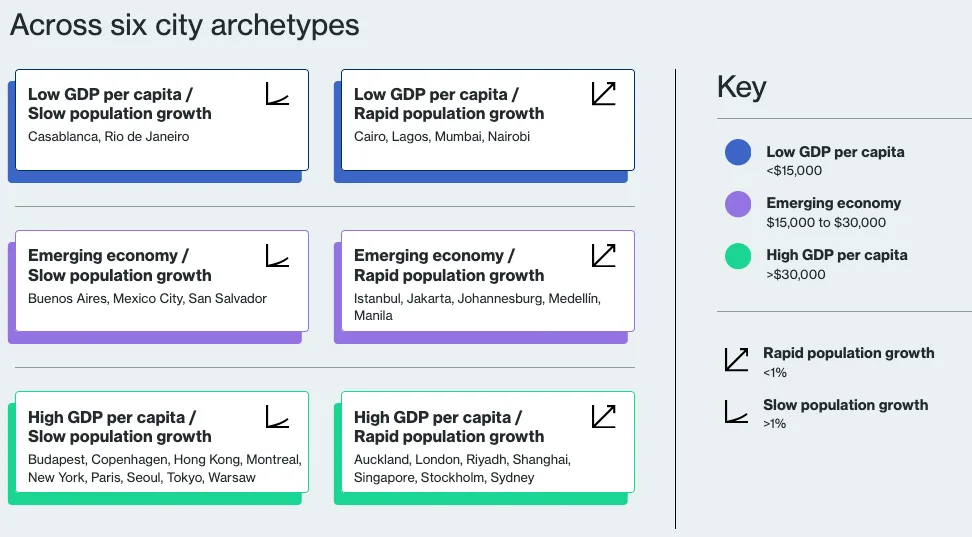
Mikkel further emphasized the importance of dynamic standards in promoting progress by creating incentives and rewards for cities to improve continuously. He said, “Often when you create standards, they don’t promote progress. For me, a crucial point is that dynamic standards not only allow for the comparison of cities at different stages but also encourages forward movement. It’s similar to some carbon accounting standards—if you only require everything to meet a certain level, you can actually discourage investment in areas that need improvement.” Therefore, rather than setting static benchmarks, this dynamic approach fosters ongoing investment and innovation, empowering cities to evolve and meet future challenges effectively.
Mikkel also talked about the inefficiency of current reward systems. “I do think this is one of the biggest societal problems we have: many of our systems are not well suited for long-term planning. Most notably, our financial valuation system is not well geared for long-term incentivization.” Building cities requires forward-thinking, as they are meant to last for centuries. He pointed out that traditional financial systems like the GDP metric developed in the post-WWII era, were effective in their time but now fall short in fostering human freedom and happiness. He used the example of the Amazon rainforest, which is only valued financially when exploited, to highlight the need for systems that better reflect our true objectives.
Elizabeth views cities as the focal point for addressing some of the most pressing global challenges. “The world is getting increasingly challenging and complex, and where all of these challenges intersect in the most acute way is in cities where large numbers of people come together. I think that our best chance of addressing the climate issue is by starting at the city level, at the municipal level, by decarbonizing the built environment, through resource efficiency, by innovating, because that’s what happens when you bring like-minded people together,” she noted.
The Bloomberg New Economy Dynamic Cities Coalition’s dedication to this mission underscores a holistic approach—one where governance, responsible investment, and collaboration between sectors are essential to shaping urban futures. Ultimately, the shared goal is clear: cities must evolve dynamically, not only to improve urban environments for a growing proportion of society but also to elevate the lives of people. As Dr. Lola Woetzel aptly remarked, “If we can make the city better, it makes us better.”