
Global Oncology Leaders Launch Rural America Task Force to Advance Equitable Cancer Access
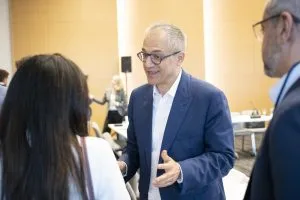
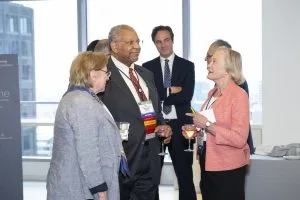
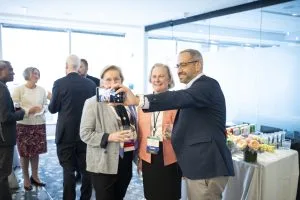
London July 3, 2025 – At this year’s ASCO Annual Meeting, global health leaders gathered under the banner of the Bloomberg New Economy International Cancer Coalition (‘Coalition’) to accelerate progress on one of oncology’s most persistent challenges: equitable access.
With participation from Mayo Clinic, Memorial Sloan Kettering Cancer Center, ASCO, the National Cancer Institute, and industry leaders including AstraZeneca, BMS, J&J, and Amgen, the Coalition launched its Rural America Task Force, aimed at designing scalable, cross-sector models to deliver care and clinical trials to underserved communities across the United States.
“Scientific innovation is only as powerful as its reach. We’re living in a time when science can save lives—today—not in five years, but now,” said Dr. Julie Gralow, Chief Medical Officer of ASCO, during opening remarks at the Coalition roundtable. “If we don’t get that science to every patient, in every place, it loses its power.”
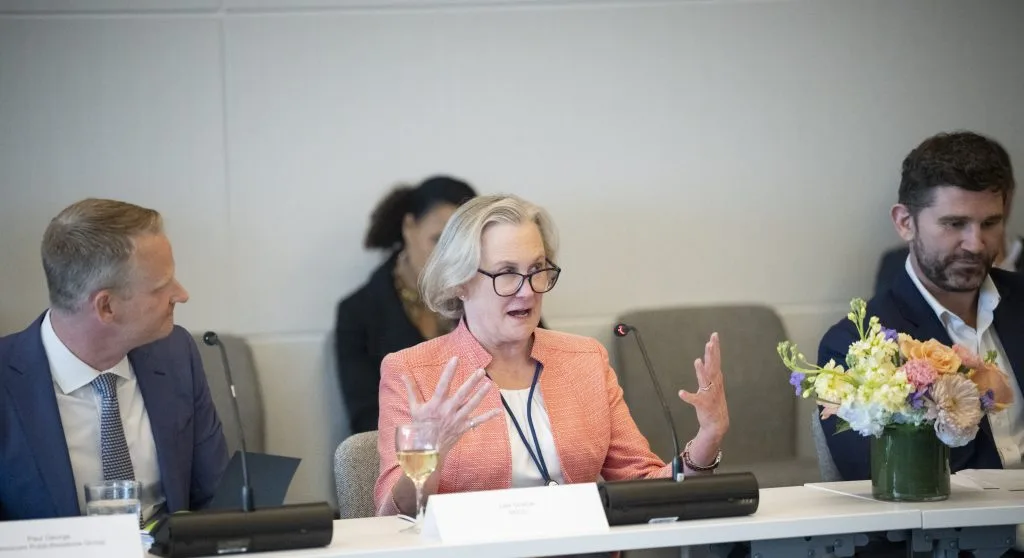
Paul George, Senior Partner at Omnicom PR Group, added: “We’re facing a paradox: the most advanced era of oncology innovation—precision therapies, adaptive trials, AI-driven diagnostics—yet persistent inequities in access. This Coalition has the credibility and reach to turn that paradox into progress.”
Translating Innovation into Infrastructure
Dr. Robert Daly of Memorial Sloan Kettering Cancer Center unveiled results from a new “hospital-at-home” trial developed in partnership with Amgen and the NCI. Originally sparked by conversations at last year’s Coalition meeting, the protocol enables delivery of advanced cancer therapies—such as Tarlatamab—outside hospital walls. For patients in rural areas, the implications are profound.
“Over 80% of U.S. cancer patients are treated in community settings,” said Daly. “Hospitalization requirements, even for mild symptoms, create access barriers that disproportionately affect rural and low-income populations.”
Mayo Clinic’s Dr. Tufia Haddad echoed that sentiment, sharing early metrics from their Clinical Trials Beyond Walls initiative, which demonstrated significant upticks in accruals and geographic reach after deploying remote consent and biospecimen collection tools. In one study involving Black men with prostate cancer, simply enabling at-home blood draws dramatically expanded enrollment. “This isn’t just about supporting Mayo,” said Haddad. “It’s about building a platform for decentralized trials and distributed care that other systems can plug into.”
Industry and Government Alignment
The Coalition’s call for action resonated across sectors. Shaalan Beg of the National Cancer Institute emphasized the importance of breaking decentralized care into manageable “bite-sized” components: patient identification, consent, tele-visits, drug delivery.
Industry leaders warned against ‘pilot purgatory,’ noting that most barriers to access are systemic, not scientific. “Clinicians aren’t afraid of risk—they’re unsupported. Without protocols or infrastructure, they can’t act.”
Global Models, Local Wins
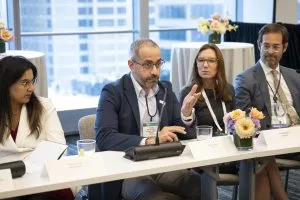
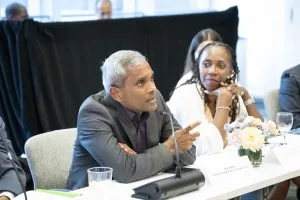
Dr. Sabe Sabesan, president of clinical oncology society of Australia, shared a proven, government-funded framework that has scaled remote trials nationally, the Australasian Tele-Trial Model. Since its 2018 launch, it has enabled over 1,000 patients to participate in 72 therapeutic trials—26% of which are commercial. But the key, he said, isn’t money or policy.
“This is social reform grounded in the culture of health equity among all stakeholders and not just clinical reform,” Sabesan stated. “Decentralized trials are like lasagna—every stakeholder is layered into the solution. If you don’t cook it all at once, it goes off.”
From Thought Leadership to Action
With success stories emerging from Latin America and Africa, the Coalition emphasized that rural inequities in the U.S. must be treated with equal urgency.
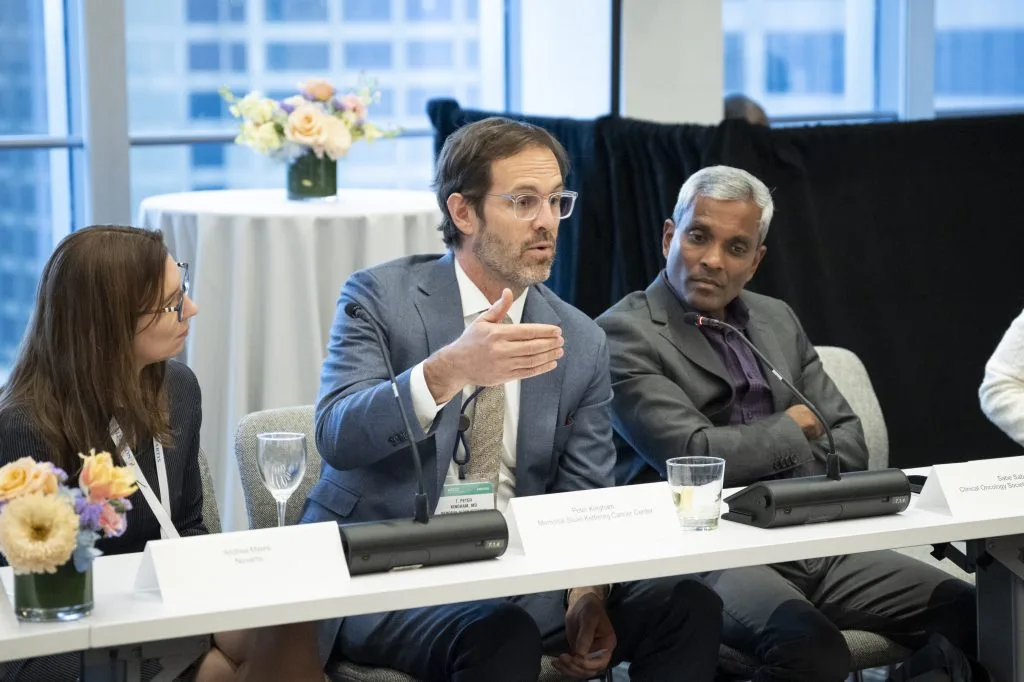
In Nigeria, Peter Kingham, Director, MSK’s Global Cancer Research and Training Program and Hepatopancreatobiliary Surgeon, shared how his team is partnering with local counterparts and other Coalition members to launch an immunotherapy trial in Nigeria tailored to high MSI-high colorectal cancer, which occurs at a higher rate in Nigeria—30% of patients vs. 10% in the U.S – and predicts response to immunotherapy.
In Brazil, Pedram Razavi, Director, Liquid Biopsy Technology and Genomics, Global Biomarker Development Program and Carlos Dos Anjos, Board Member, Oncology Center Administration Committee, previewed the imminent launch of the first-ever decentralized clinical trial center in partnership with industry and public hospitals, facilitated by the Coalition’s LATAM Task Force. The program will use nurse navigators and AI-assisted matching to connect eligible patients across the country with trial opportunities.
“This will be a turning point for clinical trial inclusion in Brazil,” said Dos Anjos. “We’re building something replicable, scalable, and deeply rooted in equity.”
As the Coalition prepares for its next convening at the Bloomberg New Economy Forum in Singapore this November, the Task Force will assemble working groups of medical centers, biopharma companies, policymakers, and implementation partners to pilot a hybrid care model for rare cancers in underserved U.S. regions.
A Shared Call to Action
While barriers remain—reimbursement, regulation, workforce capacity—leaders across sectors agreed: the time for fragmented initiatives is over.
“Every protocol can be decentralized. We have the tools—it’s a matter of collective will.” said Sabesan.
This session was proudly sponsored by by FleishmanHillard/Omnicom Public Relations Group, the Coalition’s strategic communication partner.
About The International Cancer Coalition
The Bloomberg New Economy International Cancer Coalition brings together academia, industry, government, patient advocacy and policy think tanks to tackle challenges facing health equity by accelerating cancer cures and prevention through technology and collaboration.
Bloomberg New Economy Coalitions are data-driven, community-led initiatives that bring together leading experts across the public and private sectors for dialogue, collective recommendations and commitments, and coordinated action around urgent global challenges. Bloomberg New Economy is currently working on three coalitions: The International Cancer Coalition, Climate Technology Coalition and Dynamic Cities Coalition.
ENDS
For inquiries, contact:
Sepideh Shokrpour
sshokrpour@bloomberg.net