
Pan-American Cancer Consortium Unites Leaders from Across the Americas to Unlock Opportunities for Clinical Collaboration
Sponsored Content
London, July 22 – At the 2025 ASCO Annual Meeting in Chicago, the Bloomberg New Economy International Cancer Coalition (“the Coalition”) convened its first Pan-American Cancer Consortium, bringing together top leaders from healthcare systems across Latin America, the United States, and Canada. This follows the Coalition’s launch of its Rural America Task Force to advance equitable cancer access. The session focused on a shared commitment to scale cross-border multidisciplinary tumor boards (MDTs), close existing gaps in cancer care, and unlock new opportunities for clinical collaboration across the hemisphere.
With support from AstraZeneca and ASCO, the event marked a turning point in the Coalition’s mission to enable digital integration, regional coordination, and clinical innovation for underserved populations. As countries across the Americas move toward more interconnected healthcare, the call to action was clear – invest in partnerships, empower local institutions, and create new access points for patients around the world.
A Vision for Regional Cross-Border MDTs
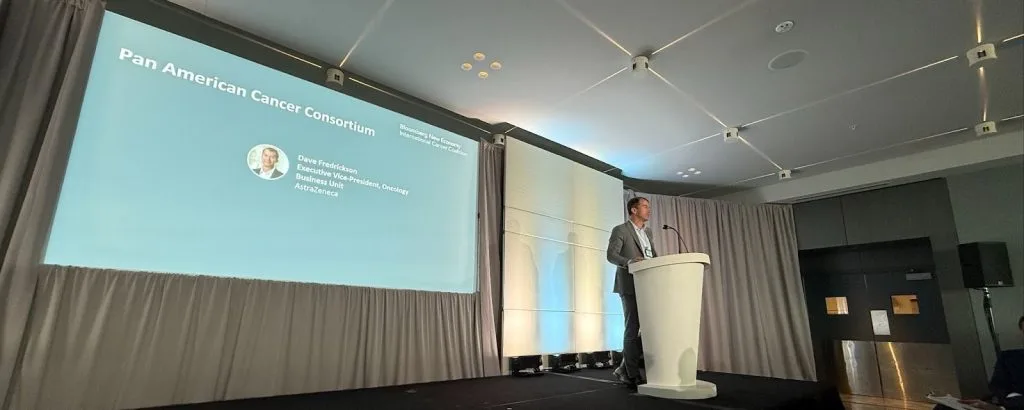
The session was opened with remarks from Pascal Soriot, CEO of AstraZeneca, reiterating the company’s commitment to equitable cancer care and highlighted the potential of regionally integrated MDTs to drive long-term impact. Dave Fredrickson, EVP Oncology Business at AstraZeneca, and Julie Gralow, Chief Medical Officer at ASCO, also emphasized the importance of sustaining momentum and addressing the operational, regulatory, and technological challenges that come with scaling innovation globally.
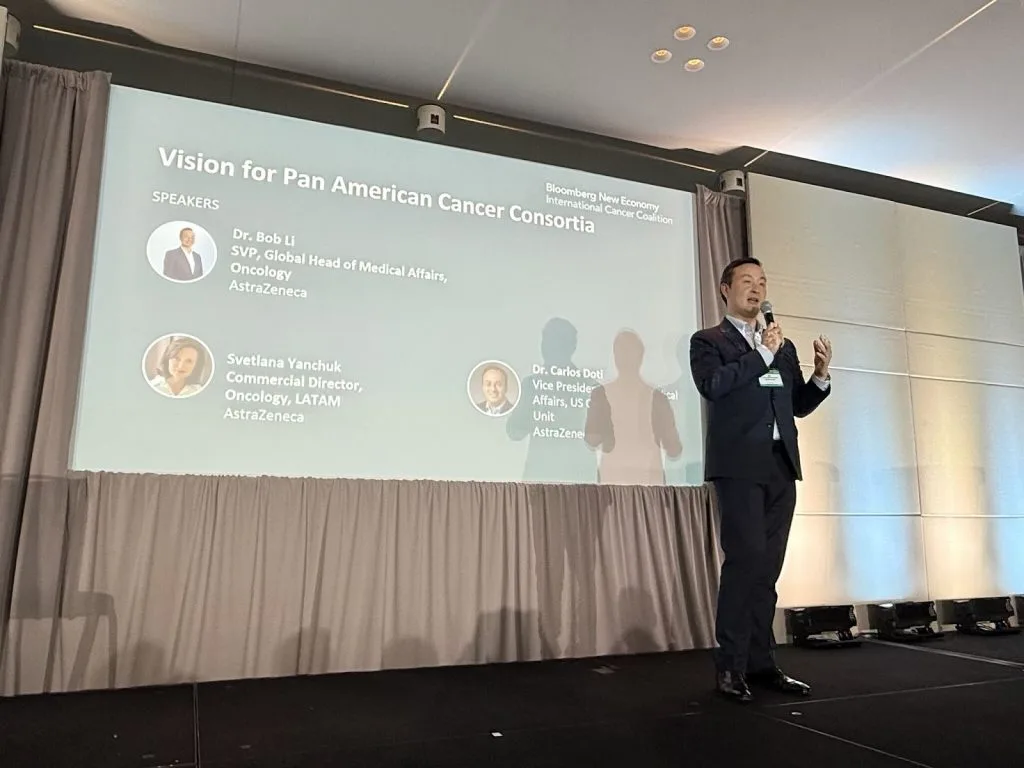
Dr. Bob Li, co-founder of the Bloomberg New Economy International Cancer Coalition and a leading voice in global oncology collaboration, reflected on the significance of this Pan-American milestone and its alignment with the Coalition’s broader mission.
“The future of cancer care isn’t about exporting one-size-fits-all solutions—it’s about co-creating systems that reflect local realities. This in collaboration with Bloomberg New Economy and ASCO made clear how global partnerships can power local innovation and access.”
— Dr. Bob Li, SVP Global Head of Medical Affairs, Oncology, AstraZeneca
The regional roundtables were opened by Carlos Doti, VP US Medical Affairs, Oncology, Christina Berube, Head of Canada Oncology Medical Affairs and Svetlana Yanchuk Oncology Director of LatAm at AstraZeneca.
LATAM Frontline Perspectives: Building from the Ground-Up
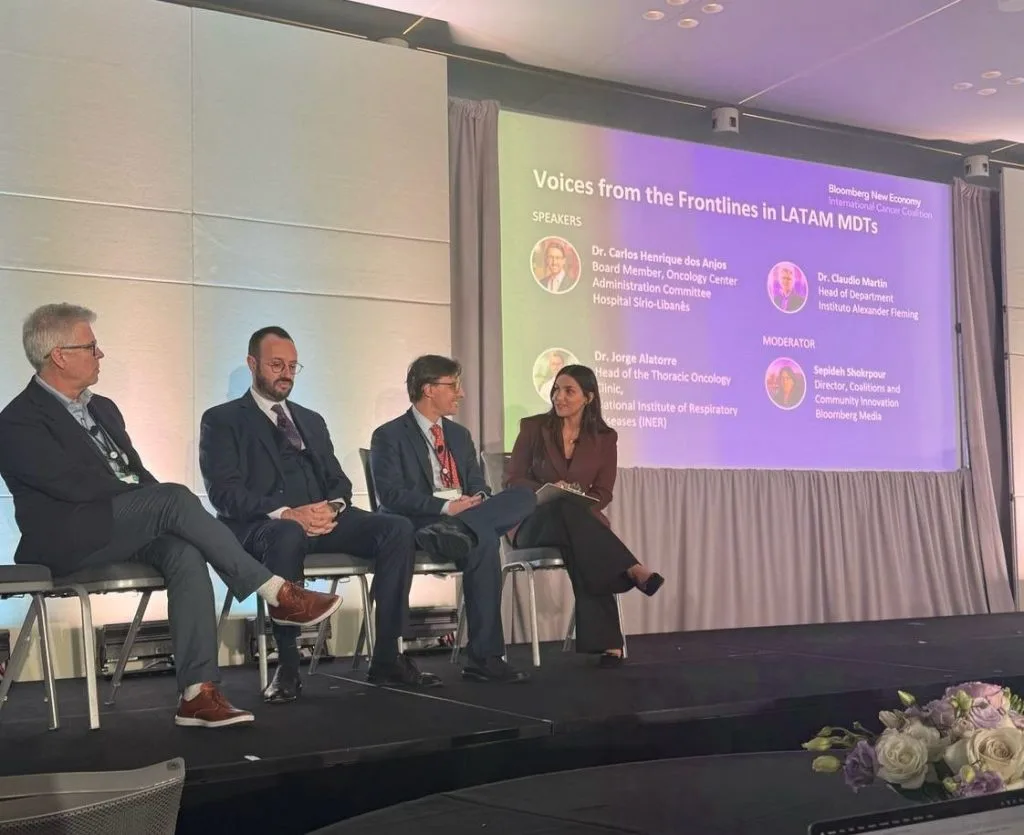
The convening then explored the presented opportunity in greater depth with two special panels and an open discussion. In the first panel, moderated by Bloomberg New Economy’s Sepideh Shokrpour, pioneering clinicians from Brazil, Mexico, and Argentina shared how their countries are rethinking cancer care from the ground up—by creating locally led, digitally enabled MDT networks.
- Dr. Claudio Martin, Head of Department, Instituto Alexander Fleming, outlined Argentina’s national virtual MDT platform, built by the Argentine Association of Clinical Oncology. The platform enables specialists across the country to jointly review cases and issue guidance, standardizing care and closing gaps between urban and rural regions.
- Dr. Carlos Henrique dos Anjos, Board Member, Oncology Center Administration Committee, Hospital Sírio-Libanês, described Brazil’s cross-border tumor board model, led by Hospital Sírio-Libanês in partnership with Chile and Ecuador. Weekly regional case discussions are strengthening collaboration between institutions and setting the stage for a Pan-American framework.
- Dr. Jorge Alatorre, Head of the Thoracic Oncology Clinic-Mexico, National Institute of Respiratory Diseases (INER), spoke about Mexico’s centralized MDTs at the National Institute of Respiratory Diseases. These are integrating AI tools and specialized review boards for lung cancer to tailor decisions to both local contexts and emerging technologies.
North America Weighs In: Infrastructure, Policy & Equity
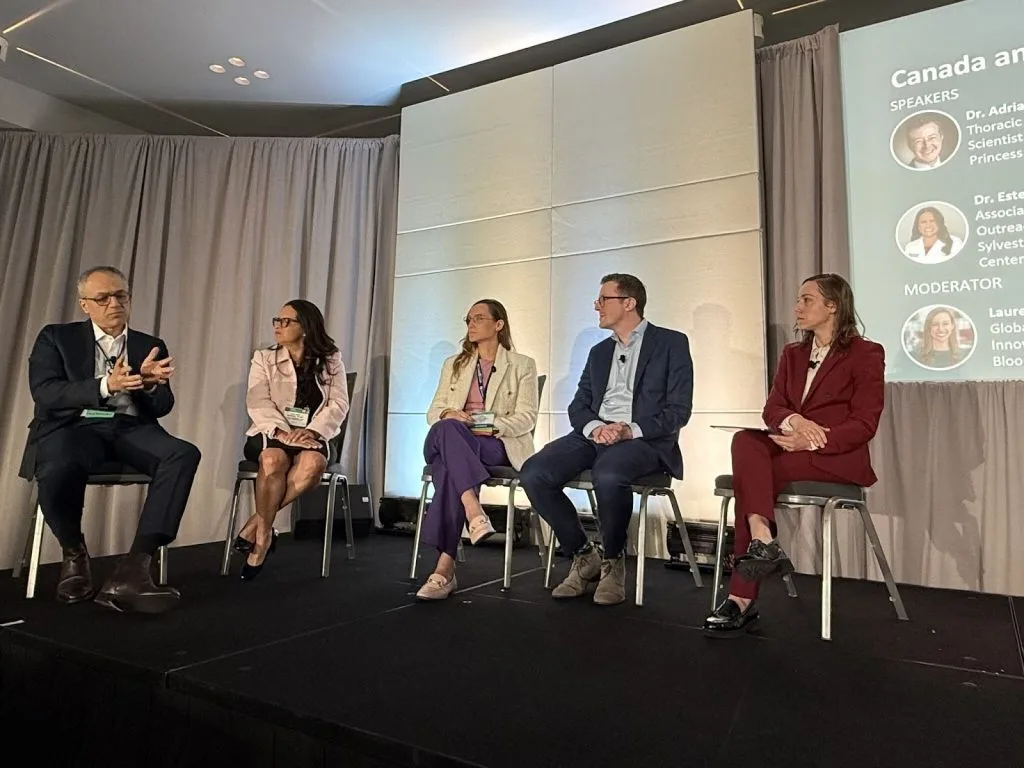
Moderated by Bloomberg New Economy’s Lauren Kiel, the second panel brought together U.S. and Canadian experts who are helping shape global best practices in MDTs, with an eye toward integration, inclusivity, and scalability.
- Dr. Pedram Razavi, Director, Liquid Biopsy Technology and Genomics, Global Biomarker Development Program, Memorial Sloan Kettering Cancer Center, shared a new breast cancer trial access initiative in Brazil. With nurse navigators identifying eligible patients and AI tools extracting clinical data, the project connects public hospitals to trials nationwide—removing cost barriers and dramatically expanding inclusion.
- Dr. Bruna Pellini, Assistant Member at the Department of Thoracic Oncology at Moffitt Cancer Center, noted that HIPAA remains a major barrier to cross-border data sharing. While collaborations are possible, clearer legal frameworks are needed to support international tumor boards without compromising patient privacy.
- Dr. Adrian Sacher Thoracic Oncologist & Affiliate Scientist at the Princess Margaret Cancer Centre, emphasized that Canadian MDT structures, particularly at Princess Margaret Cancer Centre, offer a replicable blueprint for global expansion. Key components include virtual platforms, shared protocols, and institutional trust.
- Dr. Estelamari Rodriguez Associate Director of Community Outreach, Thoracic Oncology, Sylvester Comprehensive Cancer Center, spotlighted the need for culturally competent and community-based models. Language, health literacy, and access to navigation tools must be built into every international collaboration to ensure that all patients—not just those in academic hubs—can benefit.
Building a Successful Pan-American Task Force: Next Steps
The event concluded with a robust, open-floor discussion led by Justin Finnegan from Bloomberg New Economy, with insights from external experts and clinicians in the room. Attendees engaged on topics about the future, ranging from public-private co-financing to AI-assisted MDT efficiency and sustainable policy integration.
As summarized by Ti Hwei How, VP International Oncology at AstraZeneca, the Coalition is now working to launch a Pan-American Task Force—bringing together academic, public, and industry partners to scale digital tumor boards, expand trial access, and shape policy agendas across the Americas.
Despite record investment in R&D, access to advanced cancer care remains out of reach for many. The Pan-American Cancer Consortium represents a growing global consensus that no country—nor patient—should be left behind in the fight against cancer.
The Chicago convening offered a roadmap through cross-border partnerships, digital solutions, and inclusive design. The Bloomberg New Economy International Cancer Coalition is working to unlock the full potential of the Americas as a region of innovation, equity, and lasting impact in cancer care.
About The International Cancer Coalition
The Bloomberg New Economy International Cancer Coalition brings together academia, industry, government, patient advocacy and policy think tanks to tackle the challenges of global health equity by leveraging technology and collaboration to accelerate cancer cures and prevention worldwide.
Bloomberg New Economy Coalitions are data-driven, community-led initiatives that bring together leading experts across the public and private sectors for dialogue, collective recommendations and commitments, and coordinated action around urgent global challenges. Bloomberg New Economy is currently working on three coalitions: The International Cancer Coalition, Climate Technology Coalition and Dynamic Cities Coalition.
ENDS
By Sepideh Shokrpour, Director of Bloomberg’s New Economy Coalitions & Community Innovation, a collaboration among Bloomberg Media and AstraZeneca.