
Advancing Cancer Care: The Power of Coalition and Innovation
Advancing Cancer Care: The Power of Coalition and Innovation
London, March 7, 2025 – At the 2025 Paris Colloquium, leaders from across the U.S., UK, Europe, and Africa came together with a shared mission: to expand access to cutting-edge cancer care and genetic innovation worldwide. The convening, held at the The University of Chicago John W. Boyer Center, was not just about sharing research—it was about building a network that translates science into policy advocacy that ultimately leads to enhanced solutions for patients.
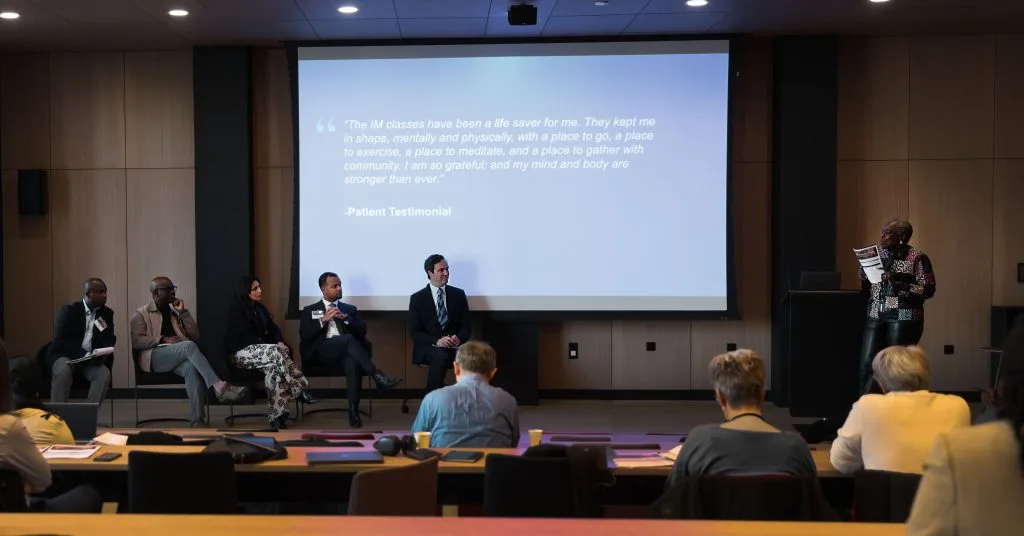
2025 International Colloquium: “Developing an African Oncogenetics Network:
A Dialogue between US, UK, Europe, and Africa”
A Platform for Progress
Under the leadership of Dr. Olufunmilayo (Funmi) Olopade, the colloquium fostered a critical dialogue on developing an “African Oncogenetics Network” —a major step toward closing gaps in cancer diagnostics and treatment across different healthcare systems. With representation from the U.S., UK, Europe, and Africa, the event exemplified what happens when experts move beyond discussion and take action toward real-world implementation.
One of the standout themes was genetic counseling as an essential part of oncology services. While the field has made strides, accessibility remains a challenge, particularly in low-resource settings. Dana-Farber Cancer Institute’s contributions highlighted how effective counseling doesn’t require enormous budgets—rather, it requires strategic investment in education, awareness, and implementation.
MATCHES: Making Telehealth Work for Oncology
Another highlight was the work of Dr. Bobby Daly and the pioneering efforts on NCI MATCHES at Memorial Sloan Kettering Cancer Center. Through innovative telehealth models, his team is proving that cancer care can be both high-quality and accessible. The MATCHES approach—leveraging remote monitoring, symptom management, and patient-centered telemedicine—demonstrates that innovation doesn’t have to be expensive to be impactful.
From AI-assisted pathology predicting cancer relapse to liquid biopsy innovations, the conference underscored that precision oncology is no longer a luxury but a necessity. The challenge now is effectively scaling these technologies in a way that benefits all patients around the world.
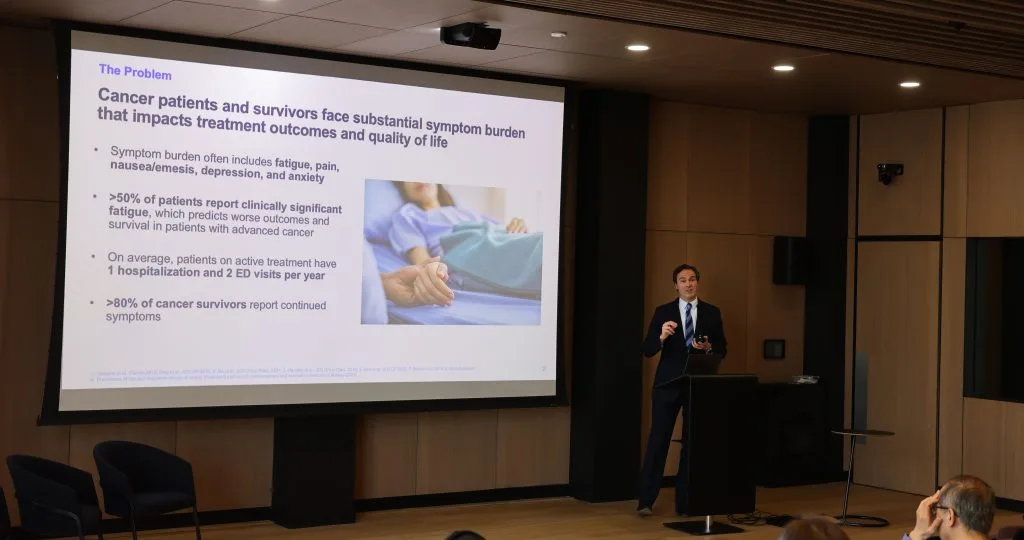
Dr. Daly speaking at the 2025 International Colloquium on the mission of MATCHES
AI in Oncology: Breaking Barriers, Not Reinforcing Them
AI-powered tools are transforming pathology and genetic counseling, helping predict cancer relapse, refine diagnoses, and personalize treatment strategies. One of the most promising discussions highlighted the use of AI-assisted pathology to improve risk prediction—a scalable and cost-effective solution that can be deployed globally, even in resource-limited settings.
Dr. Sola Olopade emphasized that genomic data analysis—alongside social and environmental factors—plays a critical role in understanding disease risk and disparities. AI-assisted pathology and predictive genomics have the potential to enhance cancer care, but equitable access remains a challenge.
The Ethics of AI and Genomics: Trust and Transparency Matter
With AI’s growing role in cancer genetics, ethical concerns take center stage. The responsible regulation of genomic data access and ensuring truly informed consent are non-negotiable. “Patients must fully understand what they are signing up for— a simple yet powerful suggestion was to have participants read consent scripts back to ensure clarity.” said Dr. Sola Olopade.
The Coalition Effect: Moving the Conversation Forward
What made this event truly impactful was not just the science, but the leaders across regions coming together to push the conversation forward. Progress in cancer care doesn’t happen in silos—it happens when leaders, institutions, and communities collaborate across borders to bring innovative solutions to the people who need them most.
What’s next? The Bloomberg New Economy International Cancer Coalition will take these insights and drive action—whether through policy, investment, or collaboration.
About The International Cancer Coalition
The Bloomberg New Economy International Cancer Coalition brings together academia, industry, government, patient advocacy and policy think tanks to fight for global health equity by leveraging technology and collaboration to accelerate cancer cures and prevention worldwide.
Bloomberg New Economy Coalitions are data-driven, community-led initiatives that bring together leading experts across the public and private sectors for dialogue, collective recommendations and commitments, and coordinated action around urgent global challenges. Bloomberg New Economy is currently working on three coalitions: The International Cancer Coalition, Climate Technology Coalition and Dynamic Cities Coalition.
ENDS
For inquiries, contact:
Sepideh Shokrpour
sshokrpour@bloomberg.net