

Pan-American Cancer Consortium (PACC): Pioneering Cross-Border Cancer Collaboration
Pan-American Cancer Consortium (PACC): Pioneering Cross-Border Cancer Collaboration
Following its launch at the 2025 ASCO Annual Meeting in Chicago, the Bloomberg New Economy International Cancer Coalition (The Coalition) held its inaugural convening on December 2nd to discuss the next phase of the Pan-American Cancer Consortium (PACC), moving from strategic alignment to designing a forward-looking strategic roadmap for subsequent phases of work across the Americas
More than 40 leaders from academic medical centers in Latin America, the US, and Canada participated in the session, which discussed how this cross-border collaboration is uniquely positioned to pioneer a new model of integration capable of expanding access, accelerating innovation, and delivering measurable improvements in patient outcomes.
“Latin America has the expertise, the innovation, and the urgency. What has been missing is the connective tissue,” said Dr. Clarissa Mathias, ASCO Board Member. “This initiative begins to create that regional infrastructure.”
A Replicable Hub-and-Spoke Model for Clinical Trial Access
Brazil’s clinical trial–access pilot has become the proof-of-concept for a scalable regional model. Stakeholders at the session stressed that regional expansion of the pilot must follow a disciplined, phased approach grounded in operational readiness, regulatory alignment, and long-term economic viability.
“The public system is full of patients who could benefit from precision therapeutics; the challenge has always been identifying them in time,” said Dr. Pedram Razavi, Coalition Member and Director of Translational Oncology Partnership Program at MSK. “This model changes that. It turns every public hospital into a potential entry point for precision oncology.”
“None of this can scale without AI. The volume of clinical information is simply too high, he added. “AI is how we transform fragmented data into real opportunities for patients.”
Dr. Carlos Henrique dos Anjos, Board Member, Oncology Center Administration Committee, Hospital Sírio-Libanês, highlighted the public-sector payoff during his session presentation. “We will not only improve care; we will demonstrate that this model is cost-effective. As patients enter a clinical trial, the system is expected to save resources while patients receive cutting-edge therapy. Everyone wins.” He noted the model’s broader applicability: “What we are building in São Paulo can be replicated nationwide, and, with the right partners, across Latin America.”
MDTs: A Proven Lever That Now Must Scale
Multidisciplinary Teams (MDTs) were repeatedly mentioned as one of the region’s most powerful tools for strengthening diagnostic accuracy, treatment consistency, and patient survival.
“The evidence is clear: high-quality MDTs improve survival,” said Dr. Sebastian Mondaca from Chile’s Red de Salud UC CHRISTUS hospital. “The challenge is ensuring that every patient, not just those in top centers, benefits from that level of expert review.”
He added: “Smaller countries should not operate in silos. Cross-border MDTs allow us to pool expertise so patients in remote or underserved areas receive the same standard of decision-making as those in major capitals.”
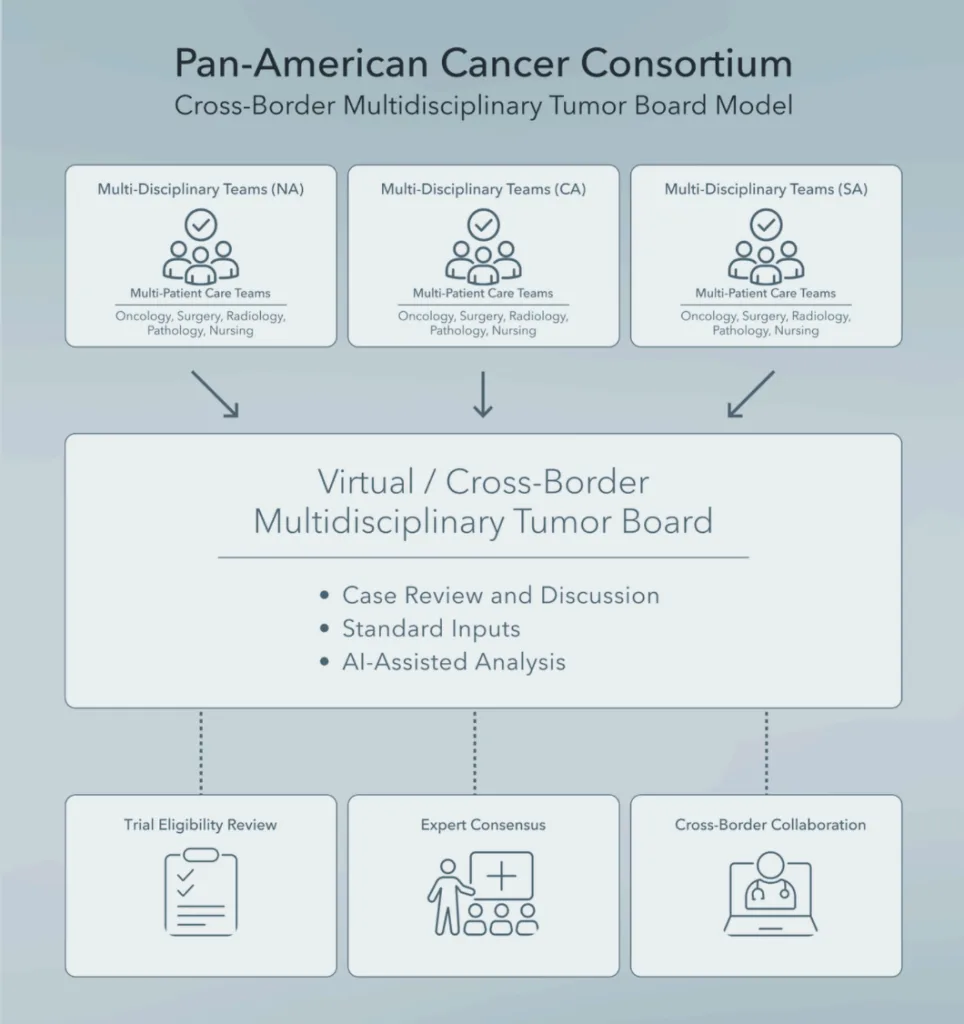
Figure 1: PACC’s suggested Cross-Border Multidisciplinary Tumor Board Model
Local Multidisciplinary Teams (MDTs) across North America (NA), Central America (CA), and South America (SA) retain responsibility for end-to-end patient care within their institutions. These MDTs connect through a Virtual / Cross-Border Multidisciplinary Tumor Board, a structured convening where standardized information is reviewed, AI-assisted analysis is applied, and expert consensus is reached. This model enables trial eligibility review, shared decision-making, and cross-border collaboration while ensuring that care delivery remains locally anchored.
Dr. Ticiana Leal of Emory University underscored that MDTs are the operational backbone of access, noting that when they function well, they accelerate entry into trials, potentially curative therapies, and multidisciplinary expertise. She emphasized that effective MDTs require structure, coordination, and rapid follow-through, and highlighted the next frontier: connecting MDTs across institutions and borders so that, with standardized inputs and workflows, virtual MDTs can deliver the same quality of decision-making for a rural patient as for one treated at a comprehensive cancer center.
AI as Foundational Infrastructure
At various touchpoints in the session, participants agreed that scaling MDTs and clinical trial access across the Western hemisphere is impossible if relying on manual processes alone. AI will be essential to:
- Extract, harmonize, and summarize clinical data;
- Streamline trial matching across multiple institutions;
- Generate structured inputs for MDT review; and
- Reduce administrative burden on strained clinical teams
But adoption will require pragmatic, country-specific strategies addressing EMR integration, data privacy, and interoperability.
Guaranteed Financing Translates to Long-Term Success
Participants also recognized that pilots fail when funding stops, with discussions revealing a need for:
- Formal economic evaluations that quantify savings for public systems;
- Clear cost analysis of the care coordination model that underpins both trial matching and MDTs;
- Co-financing structures which blend public investment, industry support, and philanthropy; and
- A shift from time-limited grants to recurring operational funding.
The objective: a financing architecture that ensures long-term, region-wide impact.
The 2026 Pan-American Cancer Consortium: From Vision to Implementation
To translate momentum into measurable progress, the Coalition is set to explore the below through the PACC worksreams:
- Develop a Regional Blueprint for Cross-Border MDTs
Governance models, data standards, technology requirements, and evaluation methods. - Expand the Brazil Clinical Trial-Access Pilot
Bringing additional SUS hospitals and select regional partners into the network.
About The International Cancer Coalition
The Bloomberg New Economy International Cancer Coalition brings together academia, industry, government, patient advocacy and policy think tanks to tackle the challenges of global health equity by leveraging technology and collaboration to accelerate cancer cures and prevention worldwide.
Bloomberg New Economy Coalitions are data-driven, community-led initiatives that bring together leading experts across the public and private sectors for dialogue, collective recommendations and commitments, and coordinated action around urgent global challenges. Bloomberg New Economy is currently working on three coalitions: The International Cancer Coalition, Climate Technology Coalition and Dynamic Cities Coalition.
ENDS
By Sepideh Shokrpour, Director of Bloomberg’s New Economy Coalitions & Community Innovation